
Bonavista Down and dirty

4–6 minutes
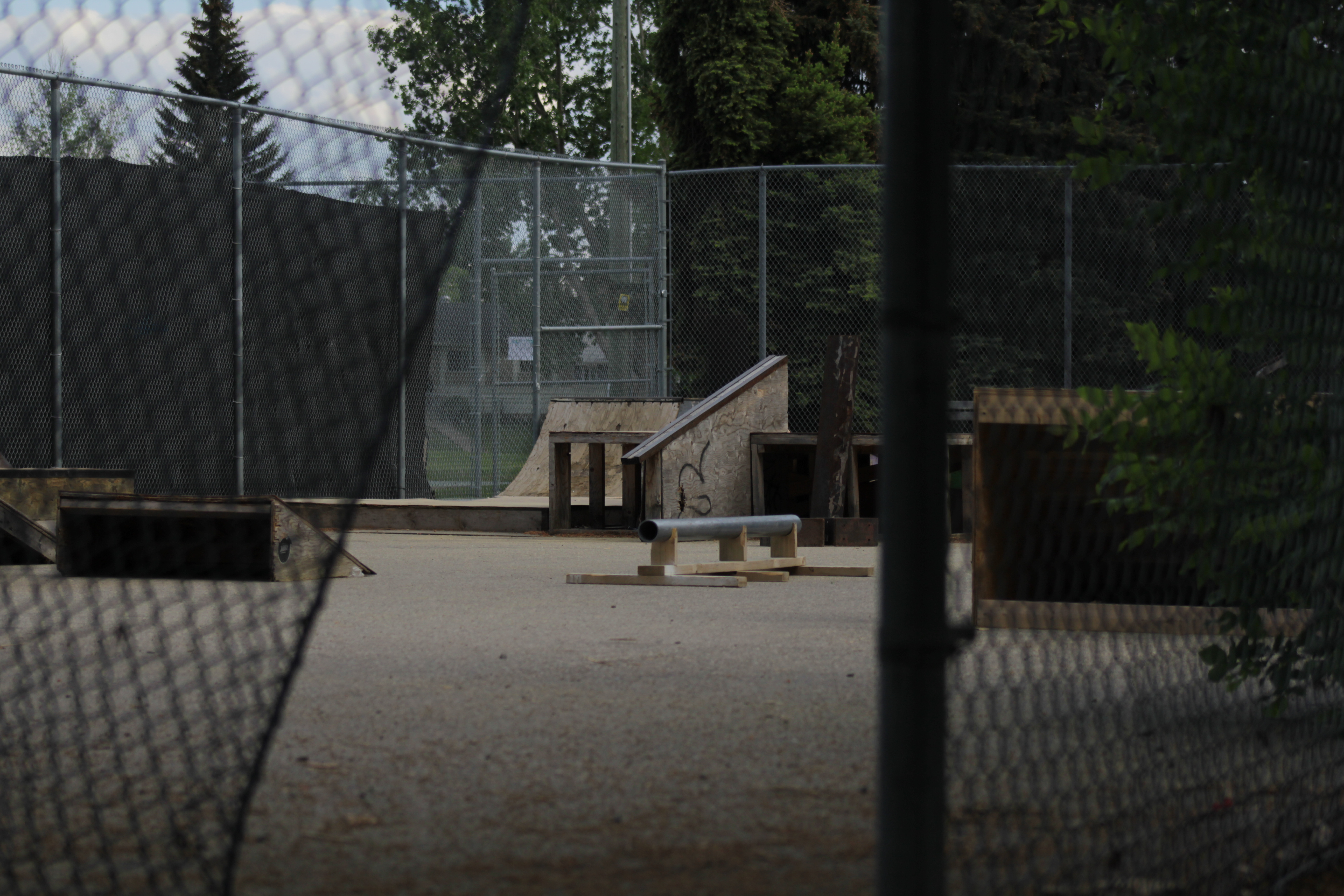
The Bonavista Downs D.I.Y. skatepark in Calgary.

1418 Lake Ontario Road, Bonavista, Calgary.

A small, outdoor sporting complex complete with tennis courts, a basketball court, a baseball diamond, and a healthy amount of greenery. Along the west side of the park sits the Bonavista Downs community hall; hidden in its shadow the Bonavista Downs do-it-yourself skatepark.

Through the assorted grass and courts, there is a sign on a fence — use of safety equipment highly recommended, no drugs or alcohol, USE AT YOUR OWN RISK.

Scribbled in the margins, bye Marcel.

It’s nearly 1 p.m. on a Thursday in June, and a kid, maybe ten years old, is helmet-clad and pumping his way up and down the park’s largest of three half-pipes. He says he’s homeschooled and on his lunch break. He lives within walking (or skating) distance and says that skateboarding is his favourite thing to do.

Shortly after, he leaves, and is replaced by Will Henley, who drove.

Henley is a business student at Mount Royal University, and he says he likes to come to the Bonavista D.I.Y. when it’s quiet.

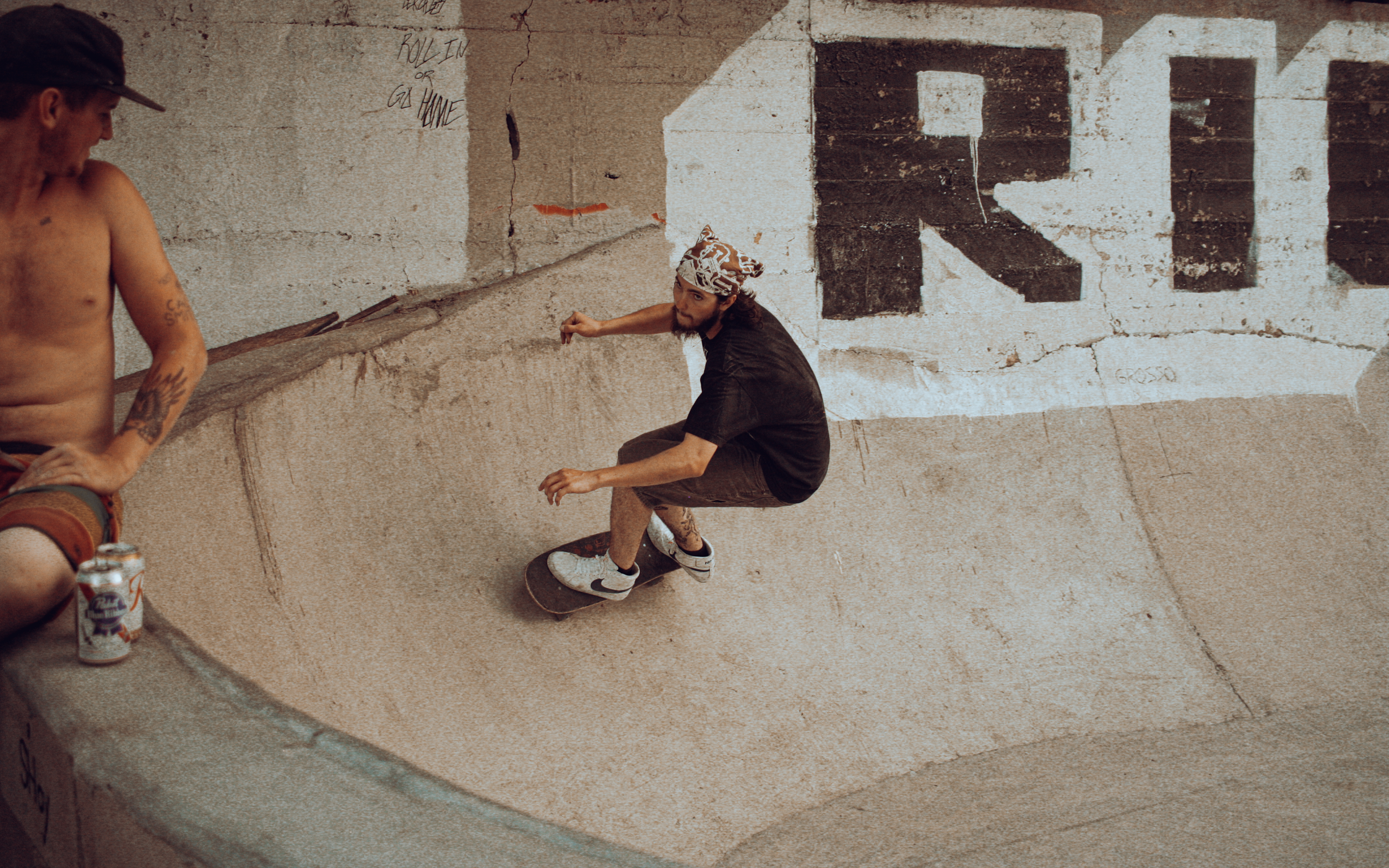
Henley starts to skate, showing off his repertoire of tricks for the camera, a symbiotic relationship as old as film and sports.

Henley says he skates this park often, and that he knows the local crew well enough. He mentions Marcel, and how he was the driving factor in developing the park.

Marcel had started a GoFundMe for the park in 2019 and he started to seem like he was a guy worth talking to.

Jeremiah Morrison agreed.

Morrison currently serves as the vice-president for the Bonavista Downs Community Association (BDCA) and was president during Marcel’s reign as “The Guy”.

“[Marcel] was my contact,” said Morrison, “He would tell me what the skateboarders were after, or issues they were having, or whatever.”

“Whenever we would do a build day, he would ensure that all of his friends and the other skateboarders came out.”

Everything in the skatepark stems from volunteer efforts. The BDCA hosts “build days” where members of the community come together to help modify the park and its features. Henley joked that most of the features were built by kid’s dads.

While there is certainly some truth to that, the Bonavista Downs skatepark has also received much support from external organizations.

According to Morrison, they have received support from The Inside, a faith-based skateboarding organization; New Line Skateparks, who donated the parks half-pipes; and Knight Custom Homes whose staff often volunteers on build days.

As well, the Bonavista Downs D.I.Y. received funds through the Activate YYC grant program — an organization that describes itself as a “tactical urbanism microgrant initiative” and is run by the Federation of Calgary Communities.

This year the park is also receiving donations from the Calgary Parking Authority, which may be a bit of solace for skateboarders with a certain talent for racking up parking tickets.

It may also warm the heart of Marcel, who is no longer in Calgary to witness the outpouring of support.

Marcel Jimenez now lives in Toronto, Ontario.
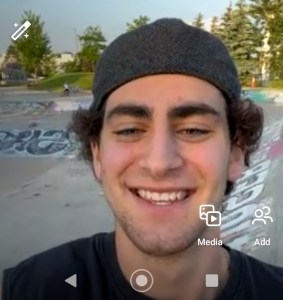
Marcel Jimenez live from a Toronto skatepark.

Whilst in Calgary, Jimenez worked as a camp counsellor for Riders on Board, coordinated efforts to build up the Bonavista Downs D.I.Y., and organized the aforementioned GoFundMe.

“We ended up raising about 250 bucks and I put that into building the mani pad and a little down-ledge that used to be there, but it ended up getting fully destroyed,” said Jimenez.

“The people that come in are from all sports, like scooters or skateboards or BMX, a lot of this stuff isn’t built for that wide variety.”

Although many credit Jimenez for his work with the park, it preceded him by quite a while. According to Jimenez himself, the D.I.Y. park has existed in different iterations for at least 14 years.

When Jimenez first found the park with the help of local skater and childhood friend Jackson Sluiter, it was an assortment of small, odd features — including a teeter-totter-esque rail that Jimenez named “the craziest thing ever”.

“We would skate from our houses [up the hill], and then bomb the hill every day,” said Jimenez, “and then there’s the church on the right side of the road when you come down that has a stair over a four-block, and a little mani pad outside the back and then there’s also a little gap [jump].”

“You go up all of the aspects of skating on the way to this park every day. Everybody would be like, oh, why don’t you come skate Swood (a.k.a. Southwood skate park) or (Shaw) Millennium or whatever?”

“I’m like, I gotta get a bus, go an hour downtown [or] I can just skate half a block through all these spots, and then go skate at a park that never has anybody [there] and I can feel at home.”

Jimenez started off the video call gushing about the D.I.Y. scene in Toronto, calling the parks there “just like what [he] wanted the (Bonavista) Downs to be” except that he didn’t have to put in the work into developing them.

By the time the call is wrapping up, Jimenez was nostalgic.

“Thank you so much for reaching out, that really made my day— for sharing and bringing…,” here, Jimenez pauses, “[For] bringing me back to what made me the person I am today.”
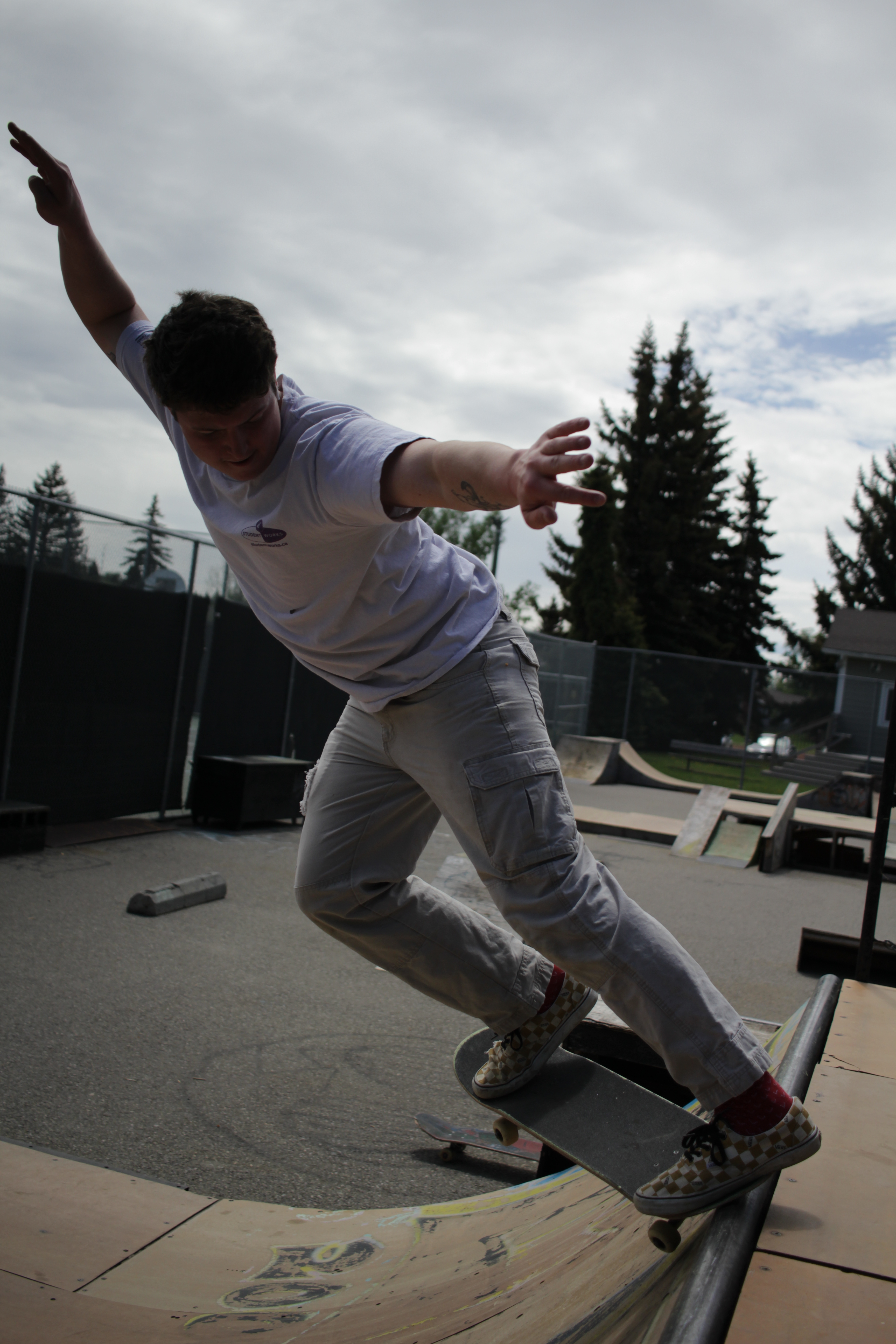
Business student Will Henley at the Bonavista Downs D.I.Y. skatepark in Calgary.

Calgary to reconnect Inglewood Bird Sanctuary with Bow River

2–3 minutes
The site of the new Bow River channel inlet.

The city of Calgary is spending $6.7 million on the Inglewood Bird Sanctuary (IBS) reconnection project, citing the need to replace outdated infrastructure and to improve water quality within the lagoon.

The IBS, initially founded in 1929 by Selby Walker, is an abode for both city-dwelling and migratory birds — as well as other assorted wildlife. Since its inception, 270 species of birds and 21 species of mammals have been recorded in the urban park, according to the city.

The project will have three stages; stage one having begun in late March of this year. This first stage consists of digging out an inlet from the Bow River into the sanctuary, as well as reshaping gravel bars affected by the 2013 floods.

The city also plans to use bioengineering techniques to combat the erosion of the sanctuary’s river banks, using natural materials to create a self-sufficient system once properly established.

“[Bioengineering is] a technique that we’ve been using in the last nine years since the flood, in terms of including willows and plants and vegetation mixed in with rock and other material to stabilize the slopes,” says René Letourneau, a senior project engineer for the city of Calgary’s Water Resources and Infrastructure Delivery team.

“Over time the plants, the roots, [they] literally bind to either the rock or whatever material and actually get stronger over time.”

Stage one is currently on track to be completed in September, but as the construction is being done within a bird sanctuary, it will ultimately depend on the behaviour of the incumbent wildlife.

“Once the nesting season is over, which we expect to be late August, we will . . . resume some of that work where we can,” said Letourneau, “September is probably a good estimate that the IBS channel is complete or near complete”.

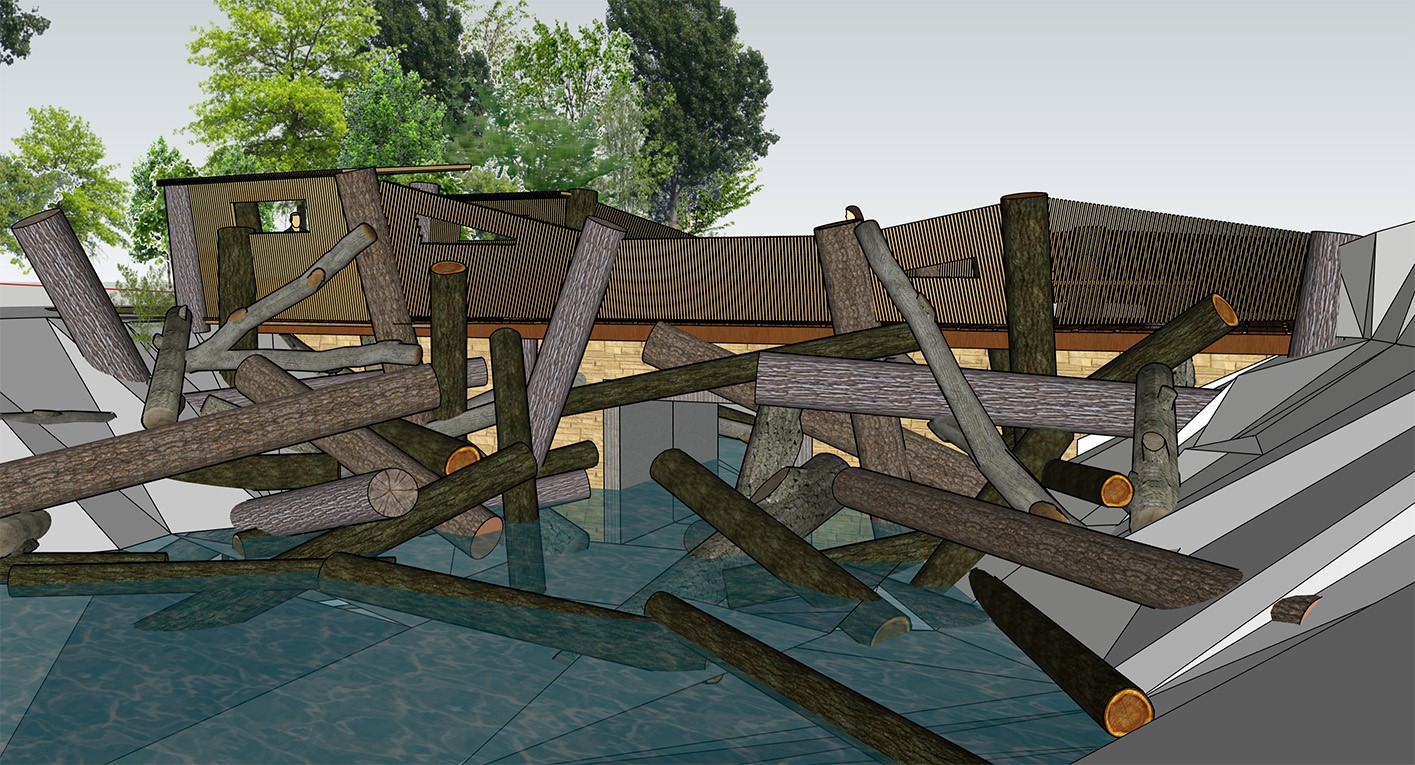
Stage two will see the installation of an art piece that doubles as a bridge over the newly constructed channel, the so-called “log jam” display designed by artist Tim Knowles.

Stage three will involve the replacement of the sanctuary’s hydraulic outlets, which were built over 100 years ago. These outlets will facilitate travel through the pond and eliminate fish traps and will also be used to control water levels within the lagoon.

“The project will also reduce the risk of the Bow river diverting to the sanctuary,” said Letourneau, “which if that were to happen it could harm the park; it could damage the Colonel Walker house and the lagoon itself.”

The full project is slated to be completed by September 2024, after which it will undergo a five-year monitoring period. The city expects the IBS to be fully operational during that time, although parts will remain fenced off to promote the establishment of vegetation and to protect the nesting sites of birds.

Centre for Suicide Prevention providing materials, training to Alberta pharmacies

2–3 minutes

The Centre for Suicide Prevention (CSP), a Calgary based organization with a focus in education, is now providing materials and START training to pharmacies in Alberta that request it.

According to the centre, pharmacists and their staff have the potential to play a crucial role in recognizing customers as suicidal, as well as how to approach them and how to assist them.

Akash Asif, the director of external relations for the CSP, spoke about how one of these interactions could look like.

“[It could be] someone is standing in front of the aisle and looking at a bottle of Tylenol, or other drugs there, and they don’t look like themselves — they look a little bit different or there’s some nervousness,” said Asif.

“[We want to] prepare people and equip them with the understanding of skills to be able to go and see and talk to them, let them know that [they’re] there for them.”

One of the CSP’s tools in achieving this goal is START training, an online training course provided by LivingWorks.

The course can be completed in less than two hours and focuses on recognizing when someone is thinking about suicide and connecting them to help and support.

“The first thing is understanding that anyone can be going through suicidal thoughts, or that anyone can consider suicide,” said Asif.

“It’s [about] recognizing the warning signs and mutations; knowing and paying attention to the people around you and understanding that there’s something different about them.”

Asif said these signs can present themselves in a variety of different manners, such as sporadic swings in mood or behaviour.

“START is really around paying attention, having [the] conversation, and then connecting that individual to the proper resources.”

Tasha Porttin, pharmacist and store manager of the Jasper Mettra Pharmacy, is one of the first participants of the CSP initiative.

Porttin says she first heard of the START training through the CSP and that most of her staff have completed the training.

“It’s great for people that aren’t necessarily healthcare workers . . . to have kind of a bit of basis around suicide prevention and knowledge on how to start that conversation with individuals”, said Porttin, “and just how to ask questions that maybe we’re not used to asking or maybe not comfortable with asking.”

Porttin also requested suicide prevention materials from the CSP, which now adorn her pharmacy.

The materials provided include assorted signage, pop-out shelf talkers, and take-away cards.

“Some people have expressed that that’s really refreshing to see,” said Porttin, “[and the staff are] really kind of grateful that it is up in the store [because] it just gives people the opportunity to know that this is a safe place.”

“I even had somebody, to be honest they were quite teary eyed, when they were thanking me for putting it up,” said Porttin.

“You could tell that that was a very touching thing for them to see.”

To those experiencing suicidal thoughts, the CSP recommends contacting Calgary’s Distress Centre. The centre has a 24-hour crisis phone line, and also provides counselling to those in need.

Better to Burnyeat than to fade away

5–8 minutes

“You’ll see a party in Calgary on Snapchat, but you’re also sitting at the bottom of the Matterhorn. It’s not the worst trade-off.”

Thomas Burnyeat, 19, hasn’t had the most typical high school experience. He attended Bishop Caroll High school while provides “individual learning environments” with “no master schedule, regular classes or school bells.”

“I went to less than 35 days of school a year,” said Burnyeat.

That number could potentially be a cause for concern, if it wasn’t for the fact that Burnyeat is an internationally ranker freestyle skier for the Alberta mogul team. 

During the winter, Burnyeat participates in a carousel of intense training regiments and the competitive circuit. If he’s not at the gym, he’s at the trampoline park. If he’s not at the trampoline park, he’s at the ski hill. If the ski hill has no snow, he’s on a water ramp.

In the fall of every year, just prior to the commencement of competitions, Burnyeat and other skiers from all over the world meet in Zermatt, Switzerland for a final training camp. 

This camp runs from late September into the end of October and is one of the only available moguls course available in the world during that time. Teams flock to the glacier from dozens of different countries.

“It’s essentially like a World Cup for two weeks,” said Burnyeat, “those are some of the coolest time [because] you’re skiing with the best in the world.”

Burnyeat himself is currently ranked 357th in his discipline by the International Ski Federation (FIS).

Burnyeat first experience with skiing was when he was 8 years old and he would visit his grandparent’s house in Panorama, BC every weekend. Like most kids, he liked the jumps — but he always held the racers in high regard.

“I like learning about the technical stuff [but] then I also like jumping, and moguls was the only ski discipline where you don’t leave one behind,” said Burnyeat.

In the following years Burnyeat would continue to hone his skiing skills before joining the Alberta Freestyle mogul team in 2016. He came with an arsenal of aerial tricks, and in the second year of the program he learned what he now considers his favourite trick- the cork 1080.

The “cork” part signifies that the trick is being done off-axis, and the “1080” denotes how much he spines. So, a cork 1080 means Burnyeat is completing three full rotations in the air, while sideways, before landing back onto his feet.

Oh, and it’s done in the middle of a race down a mogul field.

Burnyeat says he loves to end his run with the cork 1080.

“You’re just kind of gambling on the last jump,” says Burnyeat.

“Either everything goes wrong or right on the jump, and it’s a good feeling to land the [cork 1080] and end the run with a little bit of a statement.”

Burnyeat is correct when he calls it a gamble, and the stakes are obvious. There is a serious risk of injury inherent to skiing in general, let alone mogul events. 

According to a 2003 report from the Oslo Sports Trauma Research Center, “nearly half of the responding FIS freestyle World Championship skiers had previously sustained one or more major knee injuries”, and a quarter of participants had previously ruptured their anterior cruciate ligament (ACL) at least once.  

Burnyeat himself has had three knee surgeries, all on the same leg. Three years ago, he also broke his back although he says the recovery process was “fairly straightforward”.

“I definitely know right now I have one season left of bump skiing if I want to actually enjoy yeah my body,” said Burnyeat.

Chris Mavin, who works the program director and head coach for Freestyle Panorama and was Burnyeat’s first moguls coach, spoke to his drive when facing injuries.

“He’s a fighter, but he’s got his head switched on and that helps him take rehabilitation programs better than anybody that I know,” said Mavin.

“[Burnyeat] is an incredibly hard worker. He was the guy that would be the first one to training and the last one to leave, he would never give up — no matter how hard it was getting.”

While his freestyle career may be wrapping up soon, skiing will continue to be a big part of Burnyeat’s life going forward. Already, he is following in the footsteps of the greats such as Mike Douglas, JP Auclair, Cody Townsend, and countless other ex-freestyle skiers.

He’s heading to the backcountry.

Backcountry skiing, or ski touring, has grown exponentially in the past few years — mostly due to technological advances in the gear as well as more wide-spread access to avalanche education. 

While his time during the peak winter season is already committed, Burnyeat has still managed to put in about 30 days a year in the backcountry during the so-called “shoulder seasons”. 

In that time, he’s already learned a few important lessons.

In 2017, Burnyeat skied a line on Mt. Bourgeau, a 2930m peak in the aptly named “Massive” mountain range. He called it “the gnarliest thing I will ever ski in my entire life”.

Burnyeat says he did everything right. He researched the line, he evaluated the snowpack, he assessed the temperature changes at different elevations — but it left a bad taste in his mouth.

“At the end of it I was just like, I got the call right, and I did everything right, but I didn’t have the experience to make that call,” said Burnyeat.

“That’s a lot to gamble— My life, let alone the other two guys that are actually trusting me to make this call.”

Since then, Burnyeat has found a new, much more experienced, touring partner, one who he can learn from — an ACMG mountain guide by the name of Jeff Bollock. 

Skiing understandably defines Burnyeat’s life, but there’s still a lot more to him.

“I’m a carpenter, not ticketed or anything, but I operate and own part of a landscaping company with a friend in the summer.

“I mostly manage logistics [but] anytime there’s a saw involved, usually I’m there.”

Burnyeat honed his craft while taking those ski trips to his grandparents’ place. They built their house themselves and Burnyeat says he acted as the de facto foreman as a kid, by running around and telling his family what to do. 

Later, he learned some woodworking skills as well as the finer aspects of joinery and similar crafts. He says he learned to appreciate working with his hands.

“I think everyone’s a little bit too quick these days to just take it to someone before you actually try and fix it yourself,” says Burnyeat.

“Whether it’s your car, bike, skis, everything — things are not as complicated as you might think [they are].”

His manager at the ski shop Mountain Cultures, Kevin Press, holds this mindset in high regards.

“He’s been awesome,” said Press.

Between carpentry, freestyle skiing, and his current job as a ski technician, you would think Burnyeat might be satisfied. However, he has still more ambitions.

“I’m in University right now,” said Burnyeat, “but just one [class] a semester while I’m skiing to keep it light.”

While he is currently studying kinesiology, Burnyeat admits he still unsure exactly what he routes he wants to go.

“Maybe something involved in sports development… but definitely skiing.” 

The Penguin D.I.Y.

2–3 minutes
New Line Skateparks builder Tristen shreds the new Penguin D.I.Y. park in the Ramsay community of Calgary.

The Calgary community of Ramsay now has a skatepark, thanks to the efforts of some local die-hards. Named for a now demolished car wash across the street, the Penguin D.I.Y. is a large, concrete, vert-style bowl that is now “open” to the public — provided you can find it and that you have the gumption to drop in.

Construction on the bowl began September 2020, when Eddie Cooper was laid off from his job. With his newfound free time, he sought permission to add-on to an existing “Do-it-yourself” project in Calgary named “The Bridge”, which was built in 2006.

“I called up the guy and asked, “Would you mind if I came and built a few more features?”, but he wasn’t having any of it,” said Cooper.

“So, I figured I could just make my own.”

The full operation required about 30-40 volunteers, and several thousands of dollars in donations. In addition to a GoFundMe, the Penguin D.I.Y. also received support from local skate shop Ninetimes who sold special edition “Penguin” apparel.

Neighbours also helped — whether by allowing the builders access to their water hose and electricity, or by stopping by and vocalizing their support.

“No one gave us any shit, everyone is stoked,” said Ryan Stewart (aka J- Breezy), one of the park’s founders. 

A lack of pushback from the community, or from the city who may or may not be fully aware of the park, allowed Stewart, Cooper, and company to focus on the actual construction — and not the bureaucracy often associated with building, well, anything within the city.

“I was skreeting the bowl and all I could keep thinking was “What do the people want?””, said Stewart.

Following a long day of construction, it is fair to say the Penguin D.I.Y. is precisely what the people wanted. 

As the crew — which included a few skatepark builders from New Line skateparks who had come to help for the day — drank beer and skated the new bowl, dozens of pedestrians stopped by to have a look.

Cooper and Stewart have plans to expand the park to include a more “mellow” section, but that will come further down the line.

For now, they (and the Ramsay community) are just happy to have a place to skate. 

Mental wellness and wildlife rehabilitation

A heart will swell before it hardens.

The trials of oncological nurses are well documented. It can be a truly ugly occupation — a patient diagnosed with ovarian cancer, for example, has a survival rate of approximately forty per cent.

Working in such conditions has expected results amongst nursing staff and, according to a 2019 study by the University of Barcelona, 18 per cent of surveyed oncological nurses were at risk of compassion fatigue; 20 per cent experienced occupational burnout; 37 per cent were positive for high Secondary Traumatic Stress.

According to a 2020 study by the Ontario Veterinary College, 31 per cent of veterinarians in Canada experienced high compassion fatigue; 41 per cent experienced burnout; 65 per cent were deemed positive for Secondary Traumatic Stress. Suicide ideation was present amongst 26 per cent of participants; the national average amongst citizens hovers between 2 and 10 per cent.

Wildlife rehabilitators experience the worse of both worlds — the stresses endemic to veterinarian work combined with the survival rates of cancer patients; the release rate for wildlife hospitals is approximately 30-40 per cent.

The Calgary area is host to three wildlife rehabilitation centres: the Calgary Wildlife Rehabilitation Society (CWRS), the Alberta Institute for Wildlife Conservation (AIWC), and the Cochrane Ecological Institute (CEI). All three of these centres face their own challenges unique to their organization. 

The CWRS, as the only rehabilitation centre within Calgary’s city limits, sees the most patients on any given year.  As such, there is a real concern of occupational burnout.

“There’s a very high turnover rate in not just Wildlife Rehab, but in animal care as well,” said Melanie Whalen, Executive Director for CWRS.

“This has to do with burnout.”

Occupational burnout is defined as a syndrome and is a result of work-related stress. A subset of burnout is something called “caregiver syndrome”, which is specific to healthcare professionals dealing with chronically ill patients. This can lead to an assortment of symptoms: depression, anxiety, anger, high blood pressure, fatigue, insomnia, and cynicism. 

A 2018 study conducted by the Journal of Veterinary Emergency and Critical Care also suggests burnout is more prevalent amongst veterinarians than in other medical occupations. The study also posited that “[burnout] has been found to increase the rate of medical errors, lower care quality, and reduce productivity.

“There’s too many animals for one person to care for, but because the money isn’t there in the field, there really isn’t any other alternatives,” said Whalen. “So often people end up getting burnout, especially during the (spring) rehab season when it’s really busy.

“[People] reach their limits and they’re like, I can’t anymore — I’m just exhausted.”

Compassion fatigue is distinct from occupational burnout and is often described as the “cost of caring”.

Compassion Fatigue in the Animal-Care Community, co-authored by doctors Charles R. Figley and Robert G. Roop, makes a poignant observation on the subject.

“To establish and maintain a good working relationship with our clients requires a therapeutic alliance that cannot be established without empathy and compassion. Such an alliance enables us to understand what our clients need and want and to be able to help them as much as we can and should. It requires empathy, both as a by-product of our work and in the process of our work. To be empathic requires a basic empathic ability, interest, and attention. But empathy comes with risks and costs.”

Those risks and costs helped prompt Andrea Hunt, CWRS’s former Executive Director, to form the Professionals in Animal Care (PAC) support group. 

In 2017, psychologist Dr. Megan McKellen brought an animal to the CWRS facilities, and afterwards offered to do a free presentation on compassion fatigue and burnout.

“While she was talking, I looked around the table at my staff members and most of them are crying,” said Hunt.

“That to me was a clear indication they were struggling with things and that they didn’t have a place to put that, that they didn’t have anyone to talk to.”

Euthanasia is a regular occurrence in wildlife hospitals. Having to make daily decisions on whether an animal needs to be put down weighs heavily on the staff, and it is an incredibly difficult thing to get accustomed to.

“When you do get used to it, that’s what the real problem is. You don’t want people to get used to it because eventually you could become numb, and those are the hallmarks of burnout and compassion fatigue.”

Holly Lillie, Executive Director of AIWC, understands the dangers of work-related stress and syndromes, and actively seeks to combat it by establishing a healthy culture in her facility.

“Five years ago, the turnover [at AIWC] was completely different, we were probably turning over a couple of positions every year. It was because we just didn’t have the foundation in place to support people.”

Since then, AIWC has conducted regular workshops with the help of one of their volunteer workers, who happens to be a psychologist who specializes in compassion fatigue in the animal sector. 

Lillie has also made sure to have succession plans handy for all staff, as well as encourages taking time off in needed. 

“Thankfully everyone’s been in their roles for a couple of years, and they have been able to get the handle of it, but we also put a lot into succession planning too,” said Lillie.

“We don’t want people to feel like if they leave the place it’s going to crumble, we want employees to be stewards of their organization and to set it up for success.”

Public mishandling of animals is also a concern and can lead to unneeded stress. The most common misstep is “kidnapping” an animal, which is when an animal is collected as it mistakenly believed to be orphaned. Another is the attempt to keep the animals as pets and rehabilitate them at home, which rarely works out.

Clio Smeeton is the president of CEI, a 140-acre rehabilitation centre that covers a mixed grass prairie habitat, complete with an assortment of bogs, wetlands, forests, and ponds. 

“We have lots of animals come in, and people have kept them as pets and they keep them too long”, said Smeeton, as she gestures towards an enclosure housing three crows.

 “These are non-releasable because they’re flightless. [The people who found them] just kept them too long and didn’t take them in to get the wings set.”

The CEI also has several bear enclosures; they are empty.

Prior to June 1st of this year, there was one black bear cub on the property, but it has since been confiscated by the Alberta Ministry of Environment and Parks due to permit violations.

Smeeton has said she is unhappy with the decision, and with the bureaucracy involved in the black bear cub rehabilitation protocol.

The three following points in the Alberta Environment and Parks guidelines are particularly controversial to Smeeton.

In order to be eligible for rehabilitation at an approved facility, black bear cubs must be: 

Admitted to the rehabilitation facility between January and July 1st of any year. 

Cubs must be released on or before October 15th of the year they arrived at the facility and are not to be overwintered at the facility unless approved in writing by the AEP Regional Resource Manager. This approval will be determined on a case by case basis.

Inaccurate information or details that contradict Government of Alberta published information will influence the decision to approve a facility for bear rehabilitation.

Smeeton says it is unusual not to accept black bears cubs in the fall, as that is the time of year when available food becomes scarce. This can lead bears into human habitats in search of nourishment, which often leads to the bear being destroyed. 

If they survive the fall, then there is the winter kill to overcome.

“[It is wearing] to know that you’re doing the wrong thing,” said Smeeton, “that you’re letting animals go that aren’t going to live because you’re being compelled to do so by the government.”

Wildlife rehabilitation is not an easy job, and it is too often a thankless one.

 Compassion fatigue, occupational burnout, government bureaucracy — these are the issues facing the animal care community; but they can be mitigated through education, donations, and volunteers.

Green Line project has trouble getting on track

2–3 minutes

A lack of progress in Calgary’s proposed Green line is leaving both city councillors and board members frustrated, as made evident in a March 31st meeting. Don Fairbairn, chair of the Green Line Technical and Risk Committee (TRC), began his presentation by outlining the advances made thus far, which proved to be controversial.

Councillor Jyoti Gondek cast the lone vote against formally accepting Fairbairn’s report and was particularly vocal when discussing the process with Michael Thompson, general manager of Calgary’s transportation department 

“Are you okay with the fact that we are not going to start construction this year,” said Gondek, “Don’t you feel that’s a failure?” 

Thomson’s answers up to this point were mostly assurances to the council that the board was working closely with the Alberta Government on “technical issues”, of which the definition was also a point of contention. He did eventually show a sliver of doubt. “[Are] we frustrated that we’re not there yet? Yes. Am I frustrated? For sure.”

Gondek went on to ask Thompson what they need from the board to keep the project moving, and he responded with “support”. This statement was echoed by Fairbarn as he re-entered the discussion. 

“From the perspective of the Board absolutely what we need is the leadership on your part to allow us to do our work. I hear and feel and acknowledge the frustration of members of the committee and members of the public today. Michael Thompson has expressed his personal challenges. But I have to say that what really matters as far as those who get delegated this significant accountability [in] conducting the board, but [what] really matters, at least for me [as a representative] speaking on behalf of the board is that we gain a full understanding, we gain sufficient confidence.”

The council also heard from two concerned citizens, Jane Ebbern of the Calgary Alliance for the Common Good (CACG) and Jeff Binks of the LRT on the Green Foundation (LRTGF)- both of whom were unimpressed with the delays. Ebbern suggested that the CACG would protest the lack of the results once they are capable of planning large gatherings.

An added source of frustration is the insistence from the UCP government that council and board members do not discuss the project publicly. “[What] we’ve heard over the months is “don’t go to the media” but apparently they’ll go to the media whenever they feel like it” said Council Chair Shane Keating.

Councillors question policy after lockdown protests

1–2 minutes

Calgary councillors are still unsure as to where to “draw the line” following the February 27th protest at city hall. Crowds gathered to denounce COVID-19 regulations such as mandatory masks but also carried with them white supremacists’ symbolisms, namely tiki torches.

While every councillor was quick to denounce these symbols and racism in general there was some dissent on the subject on what exactly could be done.

“[City Hall] or Olympic Plaza, these are places have been traditional in regard to allowing peaceful protests to take place” said Richard Hinse, director of the Calgary Community Standards Bylaw office. He also commented on the difficulties of balancing charter rights and freedom of expression, calling it “probably one of the most difficult areas of law”.

Councillor Evan Woolley believes that hate groups are incompatible with the concept of a peaceful protest and is worried about providing such groups with a platform. “[Are] we functionally endorsing [the spread of hate] by allowing it to happen in these incredibly important public plazas?”

Councillor Chabal echoed Woolley’s sentiments, and looked for alternative ways to specifically bar tiki torches from public spaces. He questioned Director Hinse of the legality of having an open flame at a protest- drawing parallels between the use of torches, fire pits, Molotov cocktails, and burning crosses. 

Councillor Chu denounced the “racist symbol of [the] tiki torch but also urged caution. “Politicians should not direct,” said Chu, in reference to how officials can influence police. He advised the council that collectively, they need to proceed “very carefully” and be wary of the “slippery slope”. He explained that freedom of speech is what separates Canada from a nation like China, especially when it comes to contentious issues. “Do we like it? Well, some people do, some people don’t. But [that’s] the difference’.

The council ruled unanimously to  “formally denounce all statements, acts and symbols of racism, hatred, intolerance and violence that  that were collectively and individually displayed on Saturday, February 27, 2021”.