
Assisted Dying in Alberta’s Bible Belt

6–9 minutes

Since the decriminalization of Medical Assistance in Dying (MAID) in 2016, there have been 2,281 medically assisted deaths in Alberta, with roughly 30 per cent of the procedures occurring in the province’s rural areas. Exactly none of them have occurred in Covenant Health facilities, Alberta’s Catholic health care provider.

Covenant Health is funded though Alberta Health Services (AHS). They received $760 million in funding in 2021, which accounted for 86 per cent of its total revenue. 

However, Covenant Health does not strictly report to the AHS, according to the Cooperation and Services agreement between AHS and Covenant health signed in 2010.

According to the agreement, Covenant Health is “entitled to decline to provide a service which conflicts with its Principles of Faith and Ethics,” and that it is an “independent operator . . . governed by its own boards of directors”. The chairman of the this board is former Alberta Premier Ed Stemach, and they in turn report to the six Catholic Bishops of Alberta.

Covenant health adheres to the values as outlined in the Health Ethics Guide, published by the Catholic Health Alliance of Canada in 2012, and as such refuses to be complicit in matters related to abortions, gender reassignment, in vitro fertilization, contraceptive care, and assisted dying.

Rather, patients who elect to take part in such procedures must instead be moved to another facility, in what is called a “forced transfer”.

“Forced transfers [occurs] when a person who has been assessed and approved for MAID, and if they happen to be in a religious institution that does not allow MAID to be provided in their institution,” said Carl Ulrich, chair of Dying With Dignity Canada’s Edmonton Chapter and former Unitarian-Universalist minister.

“We feel that this is really an unfair imposition to someone who’s on their very last day.”

“I don’t know if everyone’s aware but ambulances are really trucks,” said Ulrich, “They’re not limousines that ride smoothly, and for someone who’s very frail and in pain it can be quite brutal to transfer them.”

From 2016 to 2020, there were a total of 125 patient transfers for MAID in Alberta, with 109 patients being transferred from faith-based facilities as reported by AHS — although that information has since been removed from their website.

Forced transfers have been controversial in relation to MAID laws due to the fundamental nature and condition of those who apply, as a patient must be suffering unbearably from an irreversible illness, a disease, or a disability in order to be deemed eligible for an assisted death.

What this means is that the patients subjected to forced transfers are usually the ones most inconvenienced by it.

In 2022, Scott Harrison of Vancouver shared his story with BC news site The Orca about the forced transfer of his partner, Christina Bates, the morning of her scheduled death. She had been staying at St- Paul’s Hospital, which is operated by Providence Health Care — a Roman Catholic faith-based care provider.

He shared his discontent with the process, writing that “the final hour of Christina’s life was unfairly stressful, and completely avoidable.”

Harrison also expressed his irritation over a public hospital having the ability to “pick and choose” which medical services they would provide.

In 2018, Ian Pope experienced similar inconveniences at the very same hospital, being transferred out of the facility twice in order to be assessed for MAiD. The first transfer resulted in a ruptured catheter bag in-transit, and it wasn’t until his third trip from St-Paul’s hospital that he was administered an assisted death.

Many Albertans will be faced with similar situations. 

When questioned about what it would take for Covenant Health to review its policy on providing MAID, communication manager Karen Diaper provided the following statement on behalf of the organization:

“Covenant Health conducts a regular review process of its policies (generally every 3 years) unless changes such as legislation occur that would suggest an earlier review or consideration for revisions is needed.”

264 of all of Alberta’s MAID deaths since 2016 occurred in the province’s area just east of Edmonton — home to five Covenant Health Hospitals.

This corridor encompasses the towns of Bonnyville, Mundare, Vegreville, Camrose, Killam, Sedgewick, Caster — as well as parts of Edmonton.

The Alberta Bible Belt: These are the towns in the area served by Covenant Health hospitals, as well as the distances to the closest AHS hospital.

For many of the people living in these communities, it’s not just about the 30-minute drive out of town that they have spent their whole lives getting accustomed to.

It’s about leaving home.

Lara White is a senior’s outreach nurse with Community Mental Health, in Camrose. She grew up in Camrose, and was born in the original St -Mary’s hospital before it was demolished and rebuilt in 1989. 

“I don’t think that it’s right that the facility has a blanket policy of refusing procedures to people,” said White.

“Our tax dollars are funding it, and we can’t access all the services that we should be able to.”

White spoke of the difficulties involved with a forced transfer, considering the closest non-Covenant Health Hospital is in Daysland – 30km outside of the city.

“If they’re in the palliative care home in St. Mary’s Hospital, and they make the decision that they want to die with dignity, they now have to be transferred to another facility,” said White, “And they might be in a really bad physical state, they might have a lot of pain. The move is a big deal — not only for them, but for their families. “

“If they’re already in palliative care, it’s asinine to me that they now have to be moved to another facility.”

White also mentioned the issue of transportation given the current state of ambulatory care in the province. As a nurse and the mother to a paramedic, she has had a first-hand view of Alberta’s current health care crisis.

“We know how difficult it is to get an ambulance even to an emergency nowadays.”

Finally, White spoke of her bond with the city of Camrose.

“If I had a condition that was really going to negatively affect the quality of my life, I can see myself choosing MAID,” said White, “And I’d like to be able to have the choice of dying in the hospital that I was born in.”

 “It would be very sad for me that [I would have] to choose to go elsewhere.”

Brenden Leier, a clinical ethicist for the University of Alberta and Stollery Children’s Hospitals, as well as the Mazankowski Alberta Heart Institute, says the issue is overstated in the political sphere.

“Systematically, the pressure from the public often is often pressure to say, in principle, you shouldn’t have the right to refuse these types of things if these institutions are publicly funded,” said Leier, “That’s more of a political issue that frontline people don’t have the opportunity to work out.”

“My preference is always to empower people at the frontlines to solve their own problems,” said Leier, speaking on healthcare in rural communities.

“They’re the best at it,” said Leier, “And because they have a vested interest, it’s not theoretical or political.”

Drawing from his personal observations, Leier believes that difficult circumstances always work out the best when local staff are “challenged or charged and respected enough to solve their own problems” and that those might simply be “ad hoc solutions on a one-by-one basis”.

“Politically, that might not look good, but practically it’s probably ideal,” said Leier.

A bigger concern, according to Leier, is the access to MAiD in long-term care facilities, in particular the nature of the people occupying them.

“People don’t consider them hospitals, they consider them to be their home where they move in to receive assistance,” said Leier.

“Can your landlord tell you, if you live in an apartment building that you can’t have MAID in your apartment?”

A 2019 Alberta Health Services Performance Report commissioned by the UCP government and prepared by Ernst and Young recommended to “end the current Covenant Health Cooperation and Services Agreement and develop a new agreement that enables more effective system coordination by AHS”.

The report also stated that “AHS should be able to set clear expectations for outcomes to Covenant and have the ability to hold Covenant accountable to achieving those outcomes”.

Bonavista Down and dirty

4–6 minutes
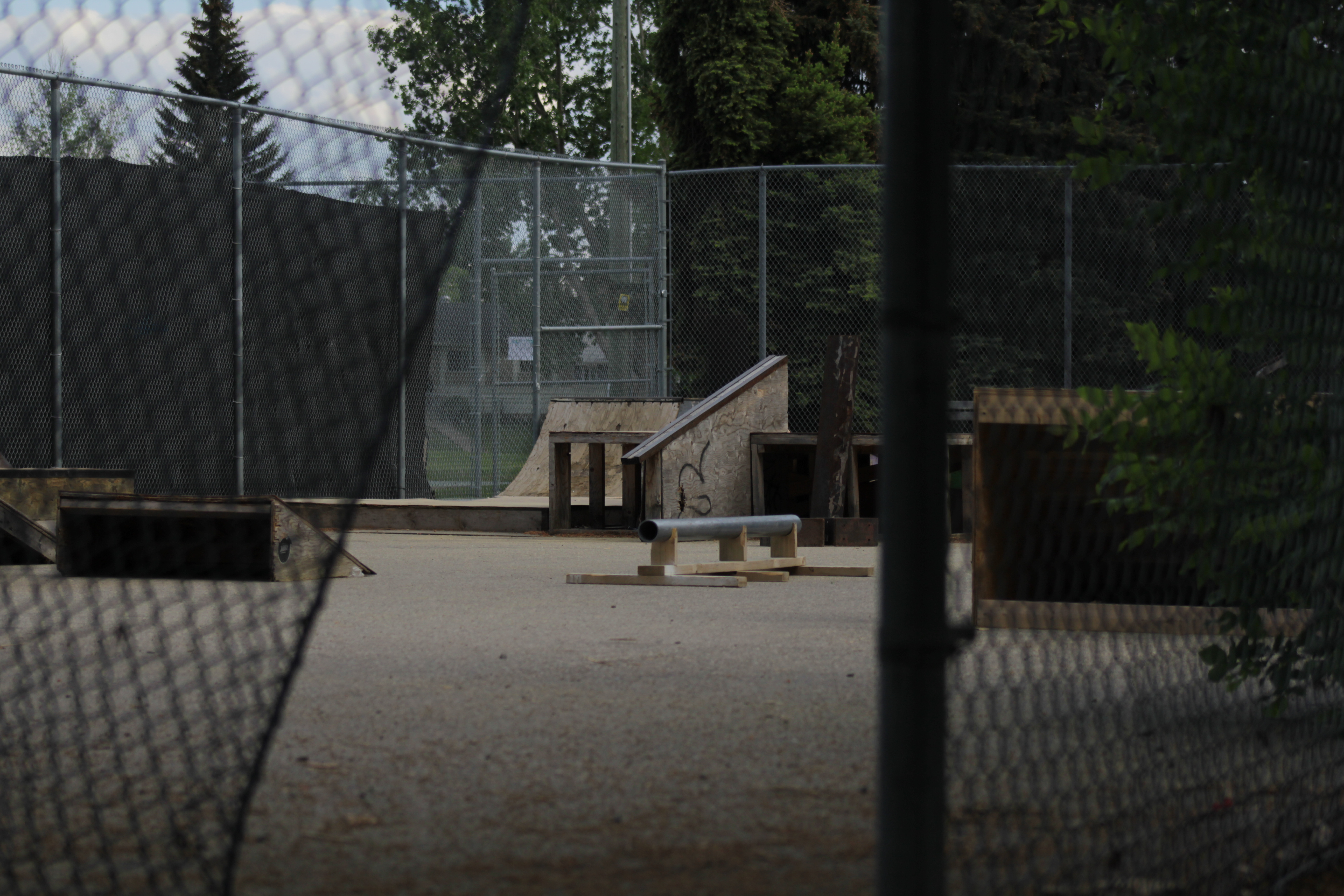
The Bonavista Downs D.I.Y. skatepark in Calgary.

1418 Lake Ontario Road, Bonavista, Calgary.

A small, outdoor sporting complex complete with tennis courts, a basketball court, a baseball diamond, and a healthy amount of greenery. Along the west side of the park sits the Bonavista Downs community hall; hidden in its shadow the Bonavista Downs do-it-yourself skatepark.

Through the assorted grass and courts, there is a sign on a fence — use of safety equipment highly recommended, no drugs or alcohol, USE AT YOUR OWN RISK.

Scribbled in the margins, bye Marcel.

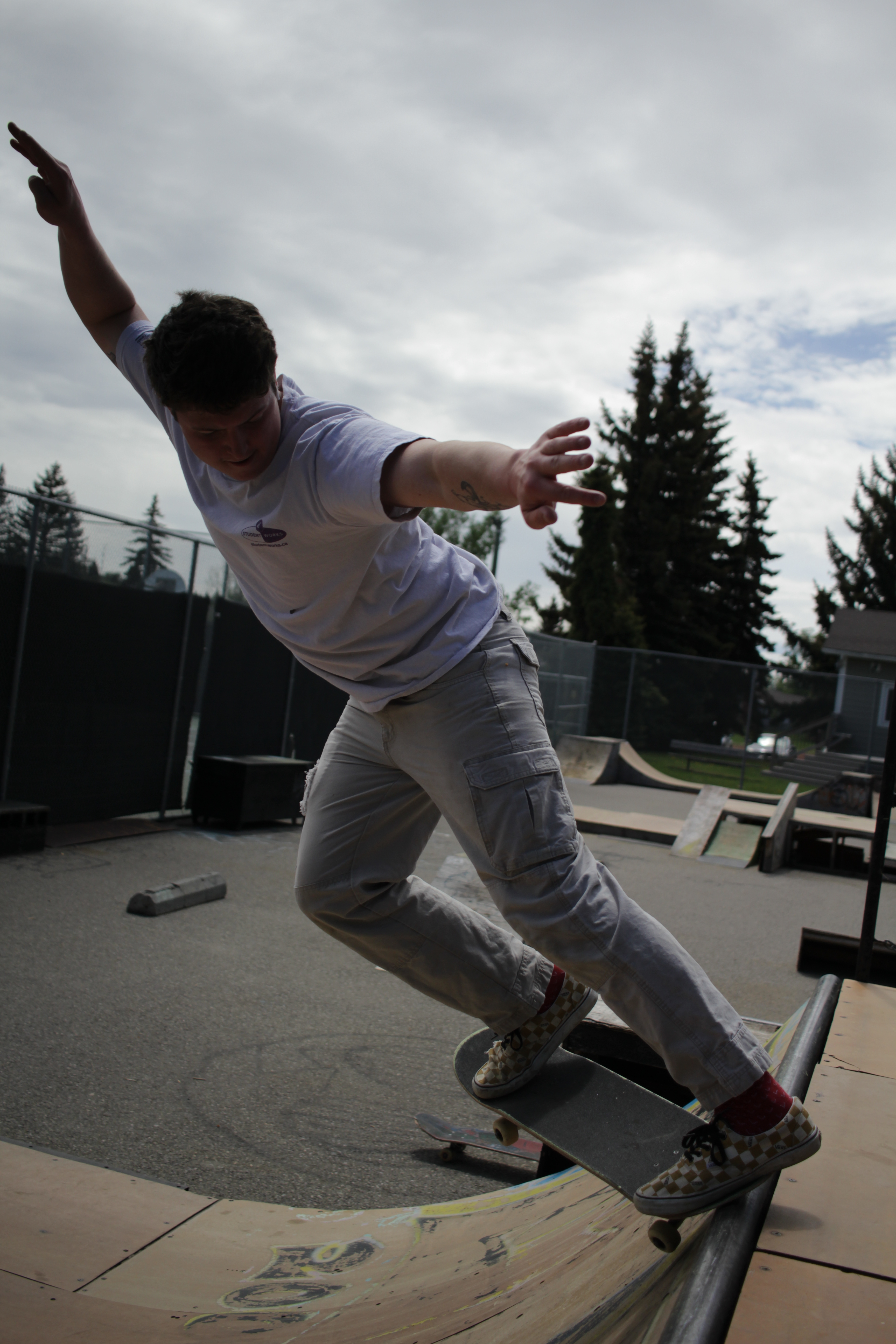
It’s nearly 1 p.m. on a Thursday in June, and a kid, maybe ten years old, is helmet-clad and pumping his way up and down the park’s largest of three half-pipes. He says he’s homeschooled and on his lunch break. He lives within walking (or skating) distance and says that skateboarding is his favourite thing to do.

Shortly after, he leaves, and is replaced by Will Henley, who drove.

Henley is a business student at Mount Royal University, and he says he likes to come to the Bonavista D.I.Y. when it’s quiet.

Henley starts to skate, showing off his repertoire of tricks for the camera, a symbiotic relationship as old as film and sports.

Henley says he skates this park often, and that he knows the local crew well enough. He mentions Marcel, and how he was the driving factor in developing the park.

Marcel had started a GoFundMe for the park in 2019 and he started to seem like he was a guy worth talking to.

Jeremiah Morrison agreed.

Morrison currently serves as the vice-president for the Bonavista Downs Community Association (BDCA) and was president during Marcel’s reign as “The Guy”.

“[Marcel] was my contact,” said Morrison, “He would tell me what the skateboarders were after, or issues they were having, or whatever.”

“Whenever we would do a build day, he would ensure that all of his friends and the other skateboarders came out.”

Everything in the skatepark stems from volunteer efforts. The BDCA hosts “build days” where members of the community come together to help modify the park and its features. Henley joked that most of the features were built by kid’s dads.

While there is certainly some truth to that, the Bonavista Downs skatepark has also received much support from external organizations.

According to Morrison, they have received support from The Inside, a faith-based skateboarding organization; New Line Skateparks, who donated the parks half-pipes; and Knight Custom Homes whose staff often volunteers on build days.

As well, the Bonavista Downs D.I.Y. received funds through the Activate YYC grant program — an organization that describes itself as a “tactical urbanism microgrant initiative” and is run by the Federation of Calgary Communities.

This year the park is also receiving donations from the Calgary Parking Authority, which may be a bit of solace for skateboarders with a certain talent for racking up parking tickets.

It may also warm the heart of Marcel, who is no longer in Calgary to witness the outpouring of support.

Marcel Jimenez now lives in Toronto, Ontario.

Marcel Jimenez live from a Toronto skatepark.

Whilst in Calgary, Jimenez worked as a camp counsellor for Riders on Board, coordinated efforts to build up the Bonavista Downs D.I.Y., and organized the aforementioned GoFundMe.

“We ended up raising about 250 bucks and I put that into building the mani pad and a little down-ledge that used to be there, but it ended up getting fully destroyed,” said Jimenez.

“The people that come in are from all sports, like scooters or skateboards or BMX, a lot of this stuff isn’t built for that wide variety.”

Although many credit Jimenez for his work with the park, it preceded him by quite a while. According to Jimenez himself, the D.I.Y. park has existed in different iterations for at least 14 years.

When Jimenez first found the park with the help of local skater and childhood friend Jackson Sluiter, it was an assortment of small, odd features — including a teeter-totter-esque rail that Jimenez named “the craziest thing ever”.

“We would skate from our houses [up the hill], and then bomb the hill every day,” said Jimenez, “and then there’s the church on the right side of the road when you come down that has a stair over a four-block, and a little mani pad outside the back and then there’s also a little gap [jump].”

“You go up all of the aspects of skating on the way to this park every day. Everybody would be like, oh, why don’t you come skate Swood (a.k.a. Southwood skate park) or (Shaw) Millennium or whatever?”

“I’m like, I gotta get a bus, go an hour downtown [or] I can just skate half a block through all these spots, and then go skate at a park that never has anybody [there] and I can feel at home.”

Jimenez started off the video call gushing about the D.I.Y. scene in Toronto, calling the parks there “just like what [he] wanted the (Bonavista) Downs to be” except that he didn’t have to put in the work into developing them.

By the time the call is wrapping up, Jimenez was nostalgic.

“Thank you so much for reaching out, that really made my day— for sharing and bringing…,” here, Jimenez pauses, “[For] bringing me back to what made me the person I am today.”

Business student Will Henley at the Bonavista Downs D.I.Y. skatepark in Calgary.

Business profile: Deviant Skateboards

2–3 minutes

“I don’t like seeing kids trying to learn on a crappy board, that just hurts my soul.”

Robert Aguirre, an ex-professional skateboarder, is the founder of Deviant Skateboards, a Calgary based skateboard company. Formed eight years ago in June of 2014, Deviant describes itself as a “raw skateboard company doing what we want, while supplying the best quality skateboards and apparel”.

A deviant is a person who “differs markedly, as in social adjustment or behavior, from what is considered normal or acceptable”. Aguirre does his best to espouse these values.

A scroll through the company’s social media feeds brings a visual assault of vulgarity, blood, and skin. The first board the brand ever designed came in three variants: one depicting the grim reaper, the next of a masked woman holding a gun to her lips, and the third featuring the pope juxtaposed over a pentagram.

Eight years later the brand is still making similar designs, but are now often collaborating with local artists.

In 2021, Deviant teamed up with Calgary tattooist Nathan Harker to create the “Pig Stopper” graphic, depicting a decapitated pig wearing a police officer’s hat.

In 2018 they hired local model Alanna Pearson to create a four-year anniversary deck design, issuing a run of skateboards featuring the mostly nude Pearson. She was also featured heavily in the brands social media campaigns in a run of advertisements that might stupefy even the staunchest libertine.

When Deviant welcomed team rider Derrick Timoshenko into the fold, they did so by issuing a deck featuring a grade school era picture of Timoshenko along with the tagline “Fucking Derrick Timoshenko”.

Aguirre certainly produces provocative designs for his decks, but he says that isn’t his priority.

“I want the best of the best,” said Aguirre, “I want my stock to be printed on the same stuff as my favorite brands, like Antihero and Supreme, and it has to be the same [quality] or I don’t want to do it.”

“I refuse to do anything budget.”

The other facet of Deviant is apparel. Unlike some other skateboard brands, Aguirre doesn’t see clothing as playing second fiddle to skateboards.

“High fashion is in skateboarding right now and fashion is a big part of skateboarding,” said Aguirre.

Aguirre says he has an eye for trends, and that a season or two ahead he “already knows the colours” that will sell.

Aguirre has also taken advantage of his new job with fashion giant Gucci to secure a partnership with an Italian wholesaler, from where Deviant will produce luxury products.

The first will be a Deviant branded cashmere toque, and will retail approximately C$200.

“You’re going to get cashmere with the label saying “Made in Italy, Florence””, said Aguirre, “and no other place is doing that.”

Aguirre is confident that his savviness in spotting trends will benefit the brand.

“[By] the end of the year, everyone should know what Deviant is.”

Never stuck in a Ruta

2–3 minutes

Golden, BC native Matt Ruta is a ski mountaineer, a skimo racer for Team Canada, a project manager for a woodworking business, and a blogger — and he has been playing in the mountains for most of his life. He says it started with his parents.

“I was very fortunate to grow up with outdoor-sy parents and I grew up hiking and scrambling and backpacking and that kind of thing, [and] they did take us out for a little bit of ski touring,” says Ruta, 26.

“When I was 16 or so, I took an avalanche course on my own.”

As eager a teenaged Ruta was to get out into the backcountry, he was also competing internationally in the sk cross circuit.

“I wasn’t the most talented or the fastest, but I got to travel to some really amazing places and kind of got the elite athlete experience even though I myself wasn’t necessarily elite,” said Ruta.

From 2011 to 2014, Ruta competed in 31 different International Ski Federation (FIS) events, his best result being a fourth-place finish in 2014.

After finishing up his ski cross racing career, Ruta found himself free to explore the mountains proper. 

“I would have been probably 17 or so when I first skied something that felt big to me. I think it was either the Kindergarten couloir on Boom Mountain or the Phantom couloir on Mt. Ogden.

“When you’re 17 years old, and you’re exploring the world outside of a racecourse it feels like you’re going to the moon.”

Couloirs are steep, narrow crevasses penetrating mountain faces; both the Kindergarten and the Phantom qualify as complex backcountry terrain. His aspirations would only grow from there.

A graduate of the Thompson Rivers University journalism program, Ruta chose to also chronicle his ski trips on an online blog. 

His website boasts trip reports detailing his adventures on impressive peaks with impressive names; the Silverhorn, the Skyladder, the Sickle, the Grand Daddy couloir, the South Twin. 

“[My most] memorable line was the Southeast Twins’ tower, which I skied in 2016,” said Ruta.

“That’s the first ski objective I did that really felt like it was more than just pushing myself, it was like something that was pushing what had been skied in the Rockies.”

On the writing side, Ruta says he takes inspirations from people like alpinist Barry Blanchard, a Calgarian who pushed the climbing boundaries in the Canadian Rockies. Blanchard also wrote a well-received biography.

“The Calling [A Life Rocked by Mountains] is such a good book,” said Ruta.

“I love it, it’s just permanently sitting on my coffee table.”

To those looking to emulate him, Ruta suggests taking advantage of resources that weren’t readily available ten years prior; things like weather observations, avalanche forecasts, and trip reports shared online.

He also suggests hiring a guide.

“For a couple hundred bucks you can do a guided day with someone like Kevin Hjertaas, who’s one of the best steep skiers in rockies history and he’s now a guide,” said Ruta.

“He’ll teach you stuff. It’s amazing.”

Better to Burnyeat than to fade away

5–8 minutes

“You’ll see a party in Calgary on Snapchat, but you’re also sitting at the bottom of the Matterhorn. It’s not the worst trade-off.”

Thomas Burnyeat, 19, hasn’t had the most typical high school experience. He attended Bishop Caroll High school while provides “individual learning environments” with “no master schedule, regular classes or school bells.”

“I went to less than 35 days of school a year,” said Burnyeat.

That number could potentially be a cause for concern, if it wasn’t for the fact that Burnyeat is an internationally ranker freestyle skier for the Alberta mogul team. 

During the winter, Burnyeat participates in a carousel of intense training regiments and the competitive circuit. If he’s not at the gym, he’s at the trampoline park. If he’s not at the trampoline park, he’s at the ski hill. If the ski hill has no snow, he’s on a water ramp.

In the fall of every year, just prior to the commencement of competitions, Burnyeat and other skiers from all over the world meet in Zermatt, Switzerland for a final training camp. 

This camp runs from late September into the end of October and is one of the only available moguls course available in the world during that time. Teams flock to the glacier from dozens of different countries.

“It’s essentially like a World Cup for two weeks,” said Burnyeat, “those are some of the coolest time [because] you’re skiing with the best in the world.”

Burnyeat himself is currently ranked 357th in his discipline by the International Ski Federation (FIS).

Burnyeat first experience with skiing was when he was 8 years old and he would visit his grandparent’s house in Panorama, BC every weekend. Like most kids, he liked the jumps — but he always held the racers in high regard.

“I like learning about the technical stuff [but] then I also like jumping, and moguls was the only ski discipline where you don’t leave one behind,” said Burnyeat.

In the following years Burnyeat would continue to hone his skiing skills before joining the Alberta Freestyle mogul team in 2016. He came with an arsenal of aerial tricks, and in the second year of the program he learned what he now considers his favourite trick- the cork 1080.

The “cork” part signifies that the trick is being done off-axis, and the “1080” denotes how much he spines. So, a cork 1080 means Burnyeat is completing three full rotations in the air, while sideways, before landing back onto his feet.

Oh, and it’s done in the middle of a race down a mogul field.

Burnyeat says he loves to end his run with the cork 1080.

“You’re just kind of gambling on the last jump,” says Burnyeat.

“Either everything goes wrong or right on the jump, and it’s a good feeling to land the [cork 1080] and end the run with a little bit of a statement.”

Burnyeat is correct when he calls it a gamble, and the stakes are obvious. There is a serious risk of injury inherent to skiing in general, let alone mogul events. 

According to a 2003 report from the Oslo Sports Trauma Research Center, “nearly half of the responding FIS freestyle World Championship skiers had previously sustained one or more major knee injuries”, and a quarter of participants had previously ruptured their anterior cruciate ligament (ACL) at least once.  

Burnyeat himself has had three knee surgeries, all on the same leg. Three years ago, he also broke his back although he says the recovery process was “fairly straightforward”.

“I definitely know right now I have one season left of bump skiing if I want to actually enjoy yeah my body,” said Burnyeat.

Chris Mavin, who works the program director and head coach for Freestyle Panorama and was Burnyeat’s first moguls coach, spoke to his drive when facing injuries.

“He’s a fighter, but he’s got his head switched on and that helps him take rehabilitation programs better than anybody that I know,” said Mavin.

“[Burnyeat] is an incredibly hard worker. He was the guy that would be the first one to training and the last one to leave, he would never give up — no matter how hard it was getting.”

While his freestyle career may be wrapping up soon, skiing will continue to be a big part of Burnyeat’s life going forward. Already, he is following in the footsteps of the greats such as Mike Douglas, JP Auclair, Cody Townsend, and countless other ex-freestyle skiers.

He’s heading to the backcountry.

Backcountry skiing, or ski touring, has grown exponentially in the past few years — mostly due to technological advances in the gear as well as more wide-spread access to avalanche education. 

While his time during the peak winter season is already committed, Burnyeat has still managed to put in about 30 days a year in the backcountry during the so-called “shoulder seasons”. 

In that time, he’s already learned a few important lessons.

In 2017, Burnyeat skied a line on Mt. Bourgeau, a 2930m peak in the aptly named “Massive” mountain range. He called it “the gnarliest thing I will ever ski in my entire life”.

Burnyeat says he did everything right. He researched the line, he evaluated the snowpack, he assessed the temperature changes at different elevations — but it left a bad taste in his mouth.

“At the end of it I was just like, I got the call right, and I did everything right, but I didn’t have the experience to make that call,” said Burnyeat.

“That’s a lot to gamble— My life, let alone the other two guys that are actually trusting me to make this call.”

Since then, Burnyeat has found a new, much more experienced, touring partner, one who he can learn from — an ACMG mountain guide by the name of Jeff Bollock. 

Skiing understandably defines Burnyeat’s life, but there’s still a lot more to him.

“I’m a carpenter, not ticketed or anything, but I operate and own part of a landscaping company with a friend in the summer.

“I mostly manage logistics [but] anytime there’s a saw involved, usually I’m there.”

Burnyeat honed his craft while taking those ski trips to his grandparents’ place. They built their house themselves and Burnyeat says he acted as the de facto foreman as a kid, by running around and telling his family what to do. 

Later, he learned some woodworking skills as well as the finer aspects of joinery and similar crafts. He says he learned to appreciate working with his hands.

“I think everyone’s a little bit too quick these days to just take it to someone before you actually try and fix it yourself,” says Burnyeat.

“Whether it’s your car, bike, skis, everything — things are not as complicated as you might think [they are].”

His manager at the ski shop Mountain Cultures, Kevin Press, holds this mindset in high regards.

“He’s been awesome,” said Press.

Between carpentry, freestyle skiing, and his current job as a ski technician, you would think Burnyeat might be satisfied. However, he has still more ambitions.

“I’m in University right now,” said Burnyeat, “but just one [class] a semester while I’m skiing to keep it light.”

While he is currently studying kinesiology, Burnyeat admits he still unsure exactly what he routes he wants to go.

“Maybe something involved in sports development… but definitely skiing.” 

The Penguin D.I.Y.

2–3 minutes
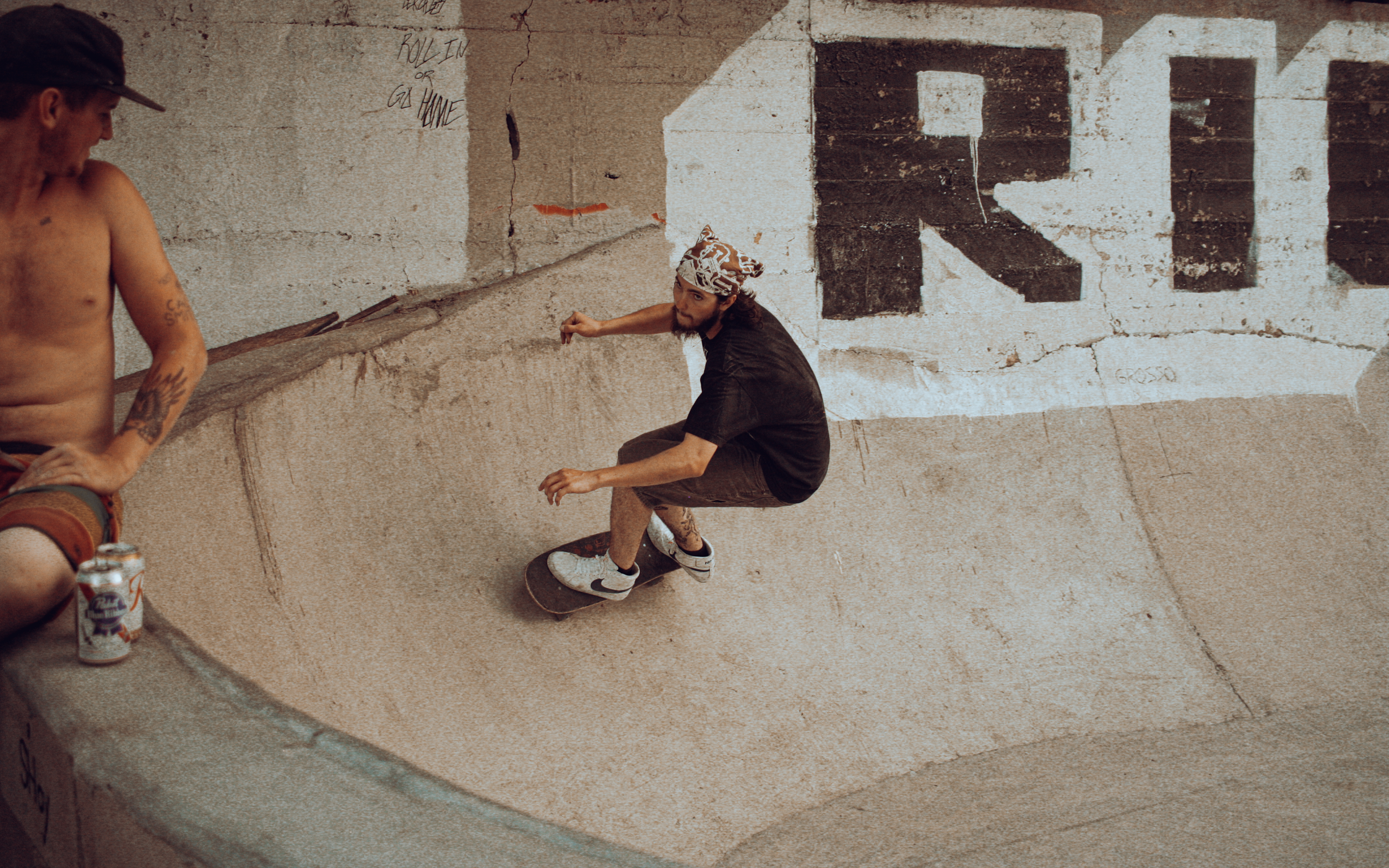
New Line Skateparks builder Tristen shreds the new Penguin D.I.Y. park in the Ramsay community of Calgary.

The Calgary community of Ramsay now has a skatepark, thanks to the efforts of some local die-hards. Named for a now demolished car wash across the street, the Penguin D.I.Y. is a large, concrete, vert-style bowl that is now “open” to the public — provided you can find it and that you have the gumption to drop in.

Construction on the bowl began September 2020, when Eddie Cooper was laid off from his job. With his newfound free time, he sought permission to add-on to an existing “Do-it-yourself” project in Calgary named “The Bridge”, which was built in 2006.

“I called up the guy and asked, “Would you mind if I came and built a few more features?”, but he wasn’t having any of it,” said Cooper.

“So, I figured I could just make my own.”

The full operation required about 30-40 volunteers, and several thousands of dollars in donations. In addition to a GoFundMe, the Penguin D.I.Y. also received support from local skate shop Ninetimes who sold special edition “Penguin” apparel.

Neighbours also helped — whether by allowing the builders access to their water hose and electricity, or by stopping by and vocalizing their support.

“No one gave us any shit, everyone is stoked,” said Ryan Stewart (aka J- Breezy), one of the park’s founders. 

A lack of pushback from the community, or from the city who may or may not be fully aware of the park, allowed Stewart, Cooper, and company to focus on the actual construction — and not the bureaucracy often associated with building, well, anything within the city.

“I was skreeting the bowl and all I could keep thinking was “What do the people want?””, said Stewart.

Following a long day of construction, it is fair to say the Penguin D.I.Y. is precisely what the people wanted. 

As the crew — which included a few skatepark builders from New Line skateparks who had come to help for the day — drank beer and skated the new bowl, dozens of pedestrians stopped by to have a look.

Cooper and Stewart have plans to expand the park to include a more “mellow” section, but that will come further down the line.

For now, they (and the Ramsay community) are just happy to have a place to skate. 

Mental wellness and wildlife rehabilitation

A heart will swell before it hardens.

The trials of oncological nurses are well documented. It can be a truly ugly occupation — a patient diagnosed with ovarian cancer, for example, has a survival rate of approximately forty per cent.

Working in such conditions has expected results amongst nursing staff and, according to a 2019 study by the University of Barcelona, 18 per cent of surveyed oncological nurses were at risk of compassion fatigue; 20 per cent experienced occupational burnout; 37 per cent were positive for high Secondary Traumatic Stress.

According to a 2020 study by the Ontario Veterinary College, 31 per cent of veterinarians in Canada experienced high compassion fatigue; 41 per cent experienced burnout; 65 per cent were deemed positive for Secondary Traumatic Stress. Suicide ideation was present amongst 26 per cent of participants; the national average amongst citizens hovers between 2 and 10 per cent.

Wildlife rehabilitators experience the worse of both worlds — the stresses endemic to veterinarian work combined with the survival rates of cancer patients; the release rate for wildlife hospitals is approximately 30-40 per cent.

The Calgary area is host to three wildlife rehabilitation centres: the Calgary Wildlife Rehabilitation Society (CWRS), the Alberta Institute for Wildlife Conservation (AIWC), and the Cochrane Ecological Institute (CEI). All three of these centres face their own challenges unique to their organization. 

The CWRS, as the only rehabilitation centre within Calgary’s city limits, sees the most patients on any given year.  As such, there is a real concern of occupational burnout.

“There’s a very high turnover rate in not just Wildlife Rehab, but in animal care as well,” said Melanie Whalen, Executive Director for CWRS.

“This has to do with burnout.”

Occupational burnout is defined as a syndrome and is a result of work-related stress. A subset of burnout is something called “caregiver syndrome”, which is specific to healthcare professionals dealing with chronically ill patients. This can lead to an assortment of symptoms: depression, anxiety, anger, high blood pressure, fatigue, insomnia, and cynicism. 

A 2018 study conducted by the Journal of Veterinary Emergency and Critical Care also suggests burnout is more prevalent amongst veterinarians than in other medical occupations. The study also posited that “[burnout] has been found to increase the rate of medical errors, lower care quality, and reduce productivity.

“There’s too many animals for one person to care for, but because the money isn’t there in the field, there really isn’t any other alternatives,” said Whalen. “So often people end up getting burnout, especially during the (spring) rehab season when it’s really busy.

“[People] reach their limits and they’re like, I can’t anymore — I’m just exhausted.”

Compassion fatigue is distinct from occupational burnout and is often described as the “cost of caring”.

Compassion Fatigue in the Animal-Care Community, co-authored by doctors Charles R. Figley and Robert G. Roop, makes a poignant observation on the subject.

“To establish and maintain a good working relationship with our clients requires a therapeutic alliance that cannot be established without empathy and compassion. Such an alliance enables us to understand what our clients need and want and to be able to help them as much as we can and should. It requires empathy, both as a by-product of our work and in the process of our work. To be empathic requires a basic empathic ability, interest, and attention. But empathy comes with risks and costs.”

Those risks and costs helped prompt Andrea Hunt, CWRS’s former Executive Director, to form the Professionals in Animal Care (PAC) support group. 

In 2017, psychologist Dr. Megan McKellen brought an animal to the CWRS facilities, and afterwards offered to do a free presentation on compassion fatigue and burnout.

“While she was talking, I looked around the table at my staff members and most of them are crying,” said Hunt.

“That to me was a clear indication they were struggling with things and that they didn’t have a place to put that, that they didn’t have anyone to talk to.”

Euthanasia is a regular occurrence in wildlife hospitals. Having to make daily decisions on whether an animal needs to be put down weighs heavily on the staff, and it is an incredibly difficult thing to get accustomed to.

“When you do get used to it, that’s what the real problem is. You don’t want people to get used to it because eventually you could become numb, and those are the hallmarks of burnout and compassion fatigue.”

Holly Lillie, Executive Director of AIWC, understands the dangers of work-related stress and syndromes, and actively seeks to combat it by establishing a healthy culture in her facility.

“Five years ago, the turnover [at AIWC] was completely different, we were probably turning over a couple of positions every year. It was because we just didn’t have the foundation in place to support people.”

Since then, AIWC has conducted regular workshops with the help of one of their volunteer workers, who happens to be a psychologist who specializes in compassion fatigue in the animal sector. 

Lillie has also made sure to have succession plans handy for all staff, as well as encourages taking time off in needed. 

“Thankfully everyone’s been in their roles for a couple of years, and they have been able to get the handle of it, but we also put a lot into succession planning too,” said Lillie.

“We don’t want people to feel like if they leave the place it’s going to crumble, we want employees to be stewards of their organization and to set it up for success.”

Public mishandling of animals is also a concern and can lead to unneeded stress. The most common misstep is “kidnapping” an animal, which is when an animal is collected as it mistakenly believed to be orphaned. Another is the attempt to keep the animals as pets and rehabilitate them at home, which rarely works out.

Clio Smeeton is the president of CEI, a 140-acre rehabilitation centre that covers a mixed grass prairie habitat, complete with an assortment of bogs, wetlands, forests, and ponds. 

“We have lots of animals come in, and people have kept them as pets and they keep them too long”, said Smeeton, as she gestures towards an enclosure housing three crows.

 “These are non-releasable because they’re flightless. [The people who found them] just kept them too long and didn’t take them in to get the wings set.”

The CEI also has several bear enclosures; they are empty.

Prior to June 1st of this year, there was one black bear cub on the property, but it has since been confiscated by the Alberta Ministry of Environment and Parks due to permit violations.

Smeeton has said she is unhappy with the decision, and with the bureaucracy involved in the black bear cub rehabilitation protocol.

The three following points in the Alberta Environment and Parks guidelines are particularly controversial to Smeeton.

In order to be eligible for rehabilitation at an approved facility, black bear cubs must be: 

Admitted to the rehabilitation facility between January and July 1st of any year. 

Cubs must be released on or before October 15th of the year they arrived at the facility and are not to be overwintered at the facility unless approved in writing by the AEP Regional Resource Manager. This approval will be determined on a case by case basis.

Inaccurate information or details that contradict Government of Alberta published information will influence the decision to approve a facility for bear rehabilitation.

Smeeton says it is unusual not to accept black bears cubs in the fall, as that is the time of year when available food becomes scarce. This can lead bears into human habitats in search of nourishment, which often leads to the bear being destroyed. 

If they survive the fall, then there is the winter kill to overcome.

“[It is wearing] to know that you’re doing the wrong thing,” said Smeeton, “that you’re letting animals go that aren’t going to live because you’re being compelled to do so by the government.”

Wildlife rehabilitation is not an easy job, and it is too often a thankless one.

 Compassion fatigue, occupational burnout, government bureaucracy — these are the issues facing the animal care community; but they can be mitigated through education, donations, and volunteers.