Never stuck in a Ruta

2–3 minutes

Golden, BC native Matt Ruta is a ski mountaineer, a skimo racer for Team Canada, a project manager for a woodworking business, and a blogger — and he has been playing in the mountains for most of his life. He says it started with his parents.

“I was very fortunate to grow up with outdoor-sy parents and I grew up hiking and scrambling and backpacking and that kind of thing, [and] they did take us out for a little bit of ski touring,” says Ruta, 26.

“When I was 16 or so, I took an avalanche course on my own.”

As eager a teenaged Ruta was to get out into the backcountry, he was also competing internationally in the sk cross circuit.

“I wasn’t the most talented or the fastest, but I got to travel to some really amazing places and kind of got the elite athlete experience even though I myself wasn’t necessarily elite,” said Ruta.

From 2011 to 2014, Ruta competed in 31 different International Ski Federation (FIS) events, his best result being a fourth-place finish in 2014.

After finishing up his ski cross racing career, Ruta found himself free to explore the mountains proper. 

“I would have been probably 17 or so when I first skied something that felt big to me. I think it was either the Kindergarten couloir on Boom Mountain or the Phantom couloir on Mt. Ogden.

“When you’re 17 years old, and you’re exploring the world outside of a racecourse it feels like you’re going to the moon.”

Couloirs are steep, narrow crevasses penetrating mountain faces; both the Kindergarten and the Phantom qualify as complex backcountry terrain. His aspirations would only grow from there.

A graduate of the Thompson Rivers University journalism program, Ruta chose to also chronicle his ski trips on an online blog. 

His website boasts trip reports detailing his adventures on impressive peaks with impressive names; the Silverhorn, the Skyladder, the Sickle, the Grand Daddy couloir, the South Twin. 

“[My most] memorable line was the Southeast Twins’ tower, which I skied in 2016,” said Ruta.

“That’s the first ski objective I did that really felt like it was more than just pushing myself, it was like something that was pushing what had been skied in the Rockies.”

On the writing side, Ruta says he takes inspirations from people like alpinist Barry Blanchard, a Calgarian who pushed the climbing boundaries in the Canadian Rockies. Blanchard also wrote a well-received biography.

“The Calling [A Life Rocked by Mountains] is such a good book,” said Ruta.

“I love it, it’s just permanently sitting on my coffee table.”

To those looking to emulate him, Ruta suggests taking advantage of resources that weren’t readily available ten years prior; things like weather observations, avalanche forecasts, and trip reports shared online.

He also suggests hiring a guide.

“For a couple hundred bucks you can do a guided day with someone like Kevin Hjertaas, who’s one of the best steep skiers in rockies history and he’s now a guide,” said Ruta.

“He’ll teach you stuff. It’s amazing.”

Avalanche professionals seek to raise awareness among Alberta snowmobilers

2–3 minutes

As more Albertans continue to venture into the province’s avalanche terrain each year, organizations like Avalanche Canada are faced with the increasing task of keeping recreationalists safe – whether they travel on foot, skis, or motor vehicle.

While there were no Alberta snowmobile fatalities in avalanche terrain in 2021, snowmobilers and snow bikers did account for six of the twelve fatalities nationwide; and since 2012, 42 of Canada’s 104 avalanche fatalities have occurred on snowmobiles. Snowmobilers are generally at more risk due to their ability to travel long distances over varying avalanche terrain, as well as the fact that snowmobiles deliver approximately five times more energy to a snowpack than a skier.

“We meet with [snowmobilers] to find out what’s going on in the snowmobile industry,” said Alex Cooper, a communications associate for Avalanche Canada, “[and to find out] where we can apply our efforts to make sure that we’re reaching out and getting snowmobilers trained.”

Avalanche Canada utilizes several programs to target snowmobilers specifically, and according to their 2021 annual report, “make significant efforts to make and maintain connections throughout Western Canada, with a specific emphasis on reaching riders in Alberta and Saskatchewan.”

Avalanche Canada launched a dedicated snowmobile outreach program in 2011 and introduced a snowmobile mentorship program in 2020. They also collaborate with groups such as the Alberta Snowmobile Association (ASA) to provide information and training guidelines.

Courses are provided by Avalanche Canada and similar organizations throughout the winter season, with the most popular program being the Avalanche Skills Training (AST1) course. Out of the 15,029 students enrolled in courses in 2020-2021, only eight per cent were snowmobilers.

Shane Lavery, 31, has recently taken up the sport of backcountry snowmobiling after nearly ten years of ski touring.

“The safety protocols in general when it comes to snowmobilers, at least in my limited experience so far … it seems to be a lot more lax,” says Lavery.

On the differences between ski touring and snowmobiling, Lavery says it comes down to increased exposure and magnitude.

“[The] sheer amount of exposure versus a ski tourer or a snowshoer [means] you can get to ten times the amount of terrain in a fraction of the time,” said Lavery, “I think the propensity to actually cause larger events is definitely there when it comes to sledding in comparison to skiing or split-boarding.”

While avalanche awareness amongst snowmobilers remains a concern, awareness amongst all general practitioners has risen steadily throughout the years. One tool to measure this growth is the increase in Mountain Information Network (MIN) postings. MINs are a way to share avalanche observations and trip reports to both recreationists and professionals.

Since its inception in 2014, more than 13,000 reports have been uploaded to the database. Out of the 5,561 submitted MINs during the 2020-21 season, 476 were in Alberta — a 205 per cent increase from the previous year. For comparison, B.C. users logged 3,445 reports in the same time span, which was a 125 per cent increase from the previous year.

Better to Burnyeat than to fade away

5–8 minutes

“You’ll see a party in Calgary on Snapchat, but you’re also sitting at the bottom of the Matterhorn. It’s not the worst trade-off.”

Thomas Burnyeat, 19, hasn’t had the most typical high school experience. He attended Bishop Caroll High school while provides “individual learning environments” with “no master schedule, regular classes or school bells.”

“I went to less than 35 days of school a year,” said Burnyeat.

That number could potentially be a cause for concern, if it wasn’t for the fact that Burnyeat is an internationally ranker freestyle skier for the Alberta mogul team. 

During the winter, Burnyeat participates in a carousel of intense training regiments and the competitive circuit. If he’s not at the gym, he’s at the trampoline park. If he’s not at the trampoline park, he’s at the ski hill. If the ski hill has no snow, he’s on a water ramp.

In the fall of every year, just prior to the commencement of competitions, Burnyeat and other skiers from all over the world meet in Zermatt, Switzerland for a final training camp. 

This camp runs from late September into the end of October and is one of the only available moguls course available in the world during that time. Teams flock to the glacier from dozens of different countries.

“It’s essentially like a World Cup for two weeks,” said Burnyeat, “those are some of the coolest time [because] you’re skiing with the best in the world.”

Burnyeat himself is currently ranked 357th in his discipline by the International Ski Federation (FIS).

Burnyeat first experience with skiing was when he was 8 years old and he would visit his grandparent’s house in Panorama, BC every weekend. Like most kids, he liked the jumps — but he always held the racers in high regard.

“I like learning about the technical stuff [but] then I also like jumping, and moguls was the only ski discipline where you don’t leave one behind,” said Burnyeat.

In the following years Burnyeat would continue to hone his skiing skills before joining the Alberta Freestyle mogul team in 2016. He came with an arsenal of aerial tricks, and in the second year of the program he learned what he now considers his favourite trick- the cork 1080.

The “cork” part signifies that the trick is being done off-axis, and the “1080” denotes how much he spines. So, a cork 1080 means Burnyeat is completing three full rotations in the air, while sideways, before landing back onto his feet.

Oh, and it’s done in the middle of a race down a mogul field.

Burnyeat says he loves to end his run with the cork 1080.

“You’re just kind of gambling on the last jump,” says Burnyeat.

“Either everything goes wrong or right on the jump, and it’s a good feeling to land the [cork 1080] and end the run with a little bit of a statement.”

Burnyeat is correct when he calls it a gamble, and the stakes are obvious. There is a serious risk of injury inherent to skiing in general, let alone mogul events. 

According to a 2003 report from the Oslo Sports Trauma Research Center, “nearly half of the responding FIS freestyle World Championship skiers had previously sustained one or more major knee injuries”, and a quarter of participants had previously ruptured their anterior cruciate ligament (ACL) at least once.  

Burnyeat himself has had three knee surgeries, all on the same leg. Three years ago, he also broke his back although he says the recovery process was “fairly straightforward”.

“I definitely know right now I have one season left of bump skiing if I want to actually enjoy yeah my body,” said Burnyeat.

Chris Mavin, who works the program director and head coach for Freestyle Panorama and was Burnyeat’s first moguls coach, spoke to his drive when facing injuries.

“He’s a fighter, but he’s got his head switched on and that helps him take rehabilitation programs better than anybody that I know,” said Mavin.

“[Burnyeat] is an incredibly hard worker. He was the guy that would be the first one to training and the last one to leave, he would never give up — no matter how hard it was getting.”

While his freestyle career may be wrapping up soon, skiing will continue to be a big part of Burnyeat’s life going forward. Already, he is following in the footsteps of the greats such as Mike Douglas, JP Auclair, Cody Townsend, and countless other ex-freestyle skiers.

He’s heading to the backcountry.

Backcountry skiing, or ski touring, has grown exponentially in the past few years — mostly due to technological advances in the gear as well as more wide-spread access to avalanche education. 

While his time during the peak winter season is already committed, Burnyeat has still managed to put in about 30 days a year in the backcountry during the so-called “shoulder seasons”. 

In that time, he’s already learned a few important lessons.

In 2017, Burnyeat skied a line on Mt. Bourgeau, a 2930m peak in the aptly named “Massive” mountain range. He called it “the gnarliest thing I will ever ski in my entire life”.

Burnyeat says he did everything right. He researched the line, he evaluated the snowpack, he assessed the temperature changes at different elevations — but it left a bad taste in his mouth.

“At the end of it I was just like, I got the call right, and I did everything right, but I didn’t have the experience to make that call,” said Burnyeat.

“That’s a lot to gamble— My life, let alone the other two guys that are actually trusting me to make this call.”

Since then, Burnyeat has found a new, much more experienced, touring partner, one who he can learn from — an ACMG mountain guide by the name of Jeff Bollock. 

Skiing understandably defines Burnyeat’s life, but there’s still a lot more to him.

“I’m a carpenter, not ticketed or anything, but I operate and own part of a landscaping company with a friend in the summer.

“I mostly manage logistics [but] anytime there’s a saw involved, usually I’m there.”

Burnyeat honed his craft while taking those ski trips to his grandparents’ place. They built their house themselves and Burnyeat says he acted as the de facto foreman as a kid, by running around and telling his family what to do. 

Later, he learned some woodworking skills as well as the finer aspects of joinery and similar crafts. He says he learned to appreciate working with his hands.

“I think everyone’s a little bit too quick these days to just take it to someone before you actually try and fix it yourself,” says Burnyeat.

“Whether it’s your car, bike, skis, everything — things are not as complicated as you might think [they are].”

His manager at the ski shop Mountain Cultures, Kevin Press, holds this mindset in high regards.

“He’s been awesome,” said Press.

Between carpentry, freestyle skiing, and his current job as a ski technician, you would think Burnyeat might be satisfied. However, he has still more ambitions.

“I’m in University right now,” said Burnyeat, “but just one [class] a semester while I’m skiing to keep it light.”

While he is currently studying kinesiology, Burnyeat admits he still unsure exactly what he routes he wants to go.

“Maybe something involved in sports development… but definitely skiing.” 

The Penguin D.I.Y.

2–3 minutes
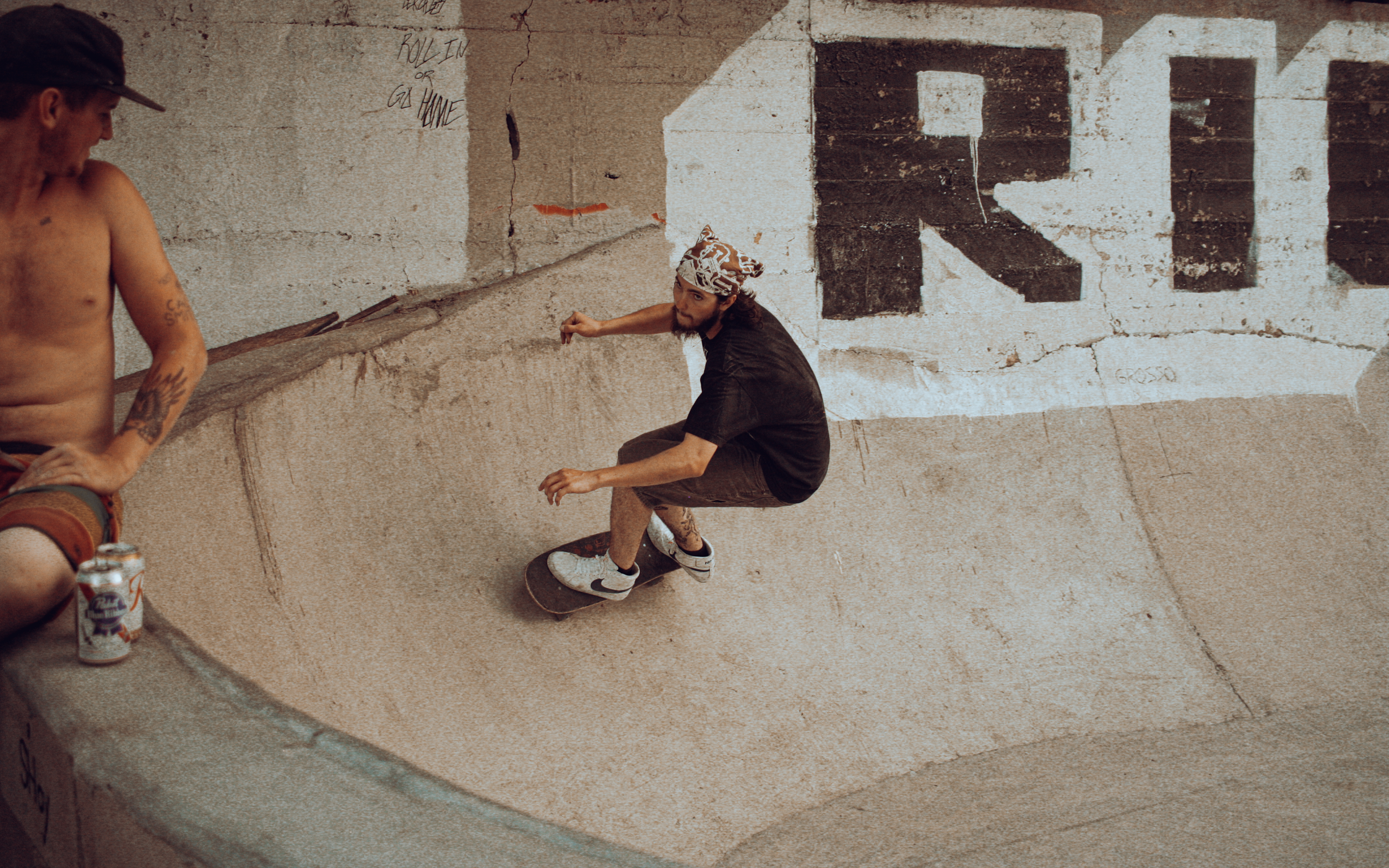
New Line Skateparks builder Tristen shreds the new Penguin D.I.Y. park in the Ramsay community of Calgary.

The Calgary community of Ramsay now has a skatepark, thanks to the efforts of some local die-hards. Named for a now demolished car wash across the street, the Penguin D.I.Y. is a large, concrete, vert-style bowl that is now “open” to the public — provided you can find it and that you have the gumption to drop in.

Construction on the bowl began September 2020, when Eddie Cooper was laid off from his job. With his newfound free time, he sought permission to add-on to an existing “Do-it-yourself” project in Calgary named “The Bridge”, which was built in 2006.

“I called up the guy and asked, “Would you mind if I came and built a few more features?”, but he wasn’t having any of it,” said Cooper.

“So, I figured I could just make my own.”

The full operation required about 30-40 volunteers, and several thousands of dollars in donations. In addition to a GoFundMe, the Penguin D.I.Y. also received support from local skate shop Ninetimes who sold special edition “Penguin” apparel.

Neighbours also helped — whether by allowing the builders access to their water hose and electricity, or by stopping by and vocalizing their support.

“No one gave us any shit, everyone is stoked,” said Ryan Stewart (aka J- Breezy), one of the park’s founders. 

A lack of pushback from the community, or from the city who may or may not be fully aware of the park, allowed Stewart, Cooper, and company to focus on the actual construction — and not the bureaucracy often associated with building, well, anything within the city.

“I was skreeting the bowl and all I could keep thinking was “What do the people want?””, said Stewart.

Following a long day of construction, it is fair to say the Penguin D.I.Y. is precisely what the people wanted. 

As the crew — which included a few skatepark builders from New Line skateparks who had come to help for the day — drank beer and skated the new bowl, dozens of pedestrians stopped by to have a look.

Cooper and Stewart have plans to expand the park to include a more “mellow” section, but that will come further down the line.

For now, they (and the Ramsay community) are just happy to have a place to skate. 

Mental wellness and wildlife rehabilitation

A heart will swell before it hardens.

The trials of oncological nurses are well documented. It can be a truly ugly occupation — a patient diagnosed with ovarian cancer, for example, has a survival rate of approximately forty per cent.

Working in such conditions has expected results amongst nursing staff and, according to a 2019 study by the University of Barcelona, 18 per cent of surveyed oncological nurses were at risk of compassion fatigue; 20 per cent experienced occupational burnout; 37 per cent were positive for high Secondary Traumatic Stress.

According to a 2020 study by the Ontario Veterinary College, 31 per cent of veterinarians in Canada experienced high compassion fatigue; 41 per cent experienced burnout; 65 per cent were deemed positive for Secondary Traumatic Stress. Suicide ideation was present amongst 26 per cent of participants; the national average amongst citizens hovers between 2 and 10 per cent.

Wildlife rehabilitators experience the worse of both worlds — the stresses endemic to veterinarian work combined with the survival rates of cancer patients; the release rate for wildlife hospitals is approximately 30-40 per cent.

The Calgary area is host to three wildlife rehabilitation centres: the Calgary Wildlife Rehabilitation Society (CWRS), the Alberta Institute for Wildlife Conservation (AIWC), and the Cochrane Ecological Institute (CEI). All three of these centres face their own challenges unique to their organization. 

The CWRS, as the only rehabilitation centre within Calgary’s city limits, sees the most patients on any given year.  As such, there is a real concern of occupational burnout.

“There’s a very high turnover rate in not just Wildlife Rehab, but in animal care as well,” said Melanie Whalen, Executive Director for CWRS.

“This has to do with burnout.”

Occupational burnout is defined as a syndrome and is a result of work-related stress. A subset of burnout is something called “caregiver syndrome”, which is specific to healthcare professionals dealing with chronically ill patients. This can lead to an assortment of symptoms: depression, anxiety, anger, high blood pressure, fatigue, insomnia, and cynicism. 

A 2018 study conducted by the Journal of Veterinary Emergency and Critical Care also suggests burnout is more prevalent amongst veterinarians than in other medical occupations. The study also posited that “[burnout] has been found to increase the rate of medical errors, lower care quality, and reduce productivity.

“There’s too many animals for one person to care for, but because the money isn’t there in the field, there really isn’t any other alternatives,” said Whalen. “So often people end up getting burnout, especially during the (spring) rehab season when it’s really busy.

“[People] reach their limits and they’re like, I can’t anymore — I’m just exhausted.”

Compassion fatigue is distinct from occupational burnout and is often described as the “cost of caring”.

Compassion Fatigue in the Animal-Care Community, co-authored by doctors Charles R. Figley and Robert G. Roop, makes a poignant observation on the subject.

“To establish and maintain a good working relationship with our clients requires a therapeutic alliance that cannot be established without empathy and compassion. Such an alliance enables us to understand what our clients need and want and to be able to help them as much as we can and should. It requires empathy, both as a by-product of our work and in the process of our work. To be empathic requires a basic empathic ability, interest, and attention. But empathy comes with risks and costs.”

Those risks and costs helped prompt Andrea Hunt, CWRS’s former Executive Director, to form the Professionals in Animal Care (PAC) support group. 

In 2017, psychologist Dr. Megan McKellen brought an animal to the CWRS facilities, and afterwards offered to do a free presentation on compassion fatigue and burnout.

“While she was talking, I looked around the table at my staff members and most of them are crying,” said Hunt.

“That to me was a clear indication they were struggling with things and that they didn’t have a place to put that, that they didn’t have anyone to talk to.”

Euthanasia is a regular occurrence in wildlife hospitals. Having to make daily decisions on whether an animal needs to be put down weighs heavily on the staff, and it is an incredibly difficult thing to get accustomed to.

“When you do get used to it, that’s what the real problem is. You don’t want people to get used to it because eventually you could become numb, and those are the hallmarks of burnout and compassion fatigue.”

Holly Lillie, Executive Director of AIWC, understands the dangers of work-related stress and syndromes, and actively seeks to combat it by establishing a healthy culture in her facility.

“Five years ago, the turnover [at AIWC] was completely different, we were probably turning over a couple of positions every year. It was because we just didn’t have the foundation in place to support people.”

Since then, AIWC has conducted regular workshops with the help of one of their volunteer workers, who happens to be a psychologist who specializes in compassion fatigue in the animal sector. 

Lillie has also made sure to have succession plans handy for all staff, as well as encourages taking time off in needed. 

“Thankfully everyone’s been in their roles for a couple of years, and they have been able to get the handle of it, but we also put a lot into succession planning too,” said Lillie.

“We don’t want people to feel like if they leave the place it’s going to crumble, we want employees to be stewards of their organization and to set it up for success.”

Public mishandling of animals is also a concern and can lead to unneeded stress. The most common misstep is “kidnapping” an animal, which is when an animal is collected as it mistakenly believed to be orphaned. Another is the attempt to keep the animals as pets and rehabilitate them at home, which rarely works out.

Clio Smeeton is the president of CEI, a 140-acre rehabilitation centre that covers a mixed grass prairie habitat, complete with an assortment of bogs, wetlands, forests, and ponds. 

“We have lots of animals come in, and people have kept them as pets and they keep them too long”, said Smeeton, as she gestures towards an enclosure housing three crows.

 “These are non-releasable because they’re flightless. [The people who found them] just kept them too long and didn’t take them in to get the wings set.”

The CEI also has several bear enclosures; they are empty.

Prior to June 1st of this year, there was one black bear cub on the property, but it has since been confiscated by the Alberta Ministry of Environment and Parks due to permit violations.

Smeeton has said she is unhappy with the decision, and with the bureaucracy involved in the black bear cub rehabilitation protocol.

The three following points in the Alberta Environment and Parks guidelines are particularly controversial to Smeeton.

In order to be eligible for rehabilitation at an approved facility, black bear cubs must be: 

Admitted to the rehabilitation facility between January and July 1st of any year. 

Cubs must be released on or before October 15th of the year they arrived at the facility and are not to be overwintered at the facility unless approved in writing by the AEP Regional Resource Manager. This approval will be determined on a case by case basis.

Inaccurate information or details that contradict Government of Alberta published information will influence the decision to approve a facility for bear rehabilitation.

Smeeton says it is unusual not to accept black bears cubs in the fall, as that is the time of year when available food becomes scarce. This can lead bears into human habitats in search of nourishment, which often leads to the bear being destroyed. 

If they survive the fall, then there is the winter kill to overcome.

“[It is wearing] to know that you’re doing the wrong thing,” said Smeeton, “that you’re letting animals go that aren’t going to live because you’re being compelled to do so by the government.”

Wildlife rehabilitation is not an easy job, and it is too often a thankless one.

 Compassion fatigue, occupational burnout, government bureaucracy — these are the issues facing the animal care community; but they can be mitigated through education, donations, and volunteers.

Is CWD putting Alberta’s game farms at risk?

3–4 minutes

As Chronic Wasting Disease (CWD) spreads through Alberta, one conservationist organization has announced the time is nigh for the province’s game farms.

CWD is a prion disease similar to bovine spongiform encephalopathy (BSE, or mad cow disease), except that it affects cervids rather than cattle. Like BSE and all other prion diseases, CWD has a 100 per cent fatality rate.

While the disease is being researched extensively, its potential impact is uncertain. What is certain, according to a map published in May by the United States Geological Survey (USGS), is that CWD is present in Alberta’s game farms.

In response to this USGS map, the Alberta Wilderness Association (AWA) penned an open letter to the provincial government requesting game farms be shuttered immediately, citing the fact that they help facilitate the spread of diseases like CWD into native wildlife populations.

Carolyn Campbell, a conservation specialist for the AWA, says the organization has been besieging the province to outlaw game farms since the practice was introduced in the 1980’s. 

“CWD [is] in captive facilities in Alberta, as well as in Saskatchewan [and] that really tells us a lot that this is a continued problem” says Campbell, “the chain of new infections and of supporting new infections, needs to be broken by eliminating game farms.”

According to Campbell, wild animals are curious when it comes to game farms and will often come for a closer look.  

“Body fluids that are on the ground can be eaten or even spread in the soil,” said Campbell, “and so the wildlife is vulnerable to that transmission.”

While a major worry is susceptible wildlife, there is also concern of human infection through the consumption of infected meat.

Dr. Sabine Gilch, of the University of Calgary’s Prion Disease Research department, has been conducting experiments on CWD using tissue matter attained from infected macaque monkeys.

By injecting this material cerebrally into rats, Dr. Gilch and company discovered that there was a chance of infectivity in the animals that could trigger a clinical prion disease. Based on the results of this study, which Dr. Gilch described as “a little bit controversial”, she believes human transmission possible. 

Dr. Gilch says CWD can be a problem on game farms due to the difficulty of its identification as well at its lasting properties- it has a long incubation period and can survive in soil for many years. However, she does not believe outlawing game farms to be the solution.

“I don’t think it would help now if we close all deer farms”, says Dr. Gilch, “CWD is here, it’s in the wild animals, and at the moment there is no means to stop the spread.”

Dr. Keith Lehman, Alberta’s Chief Veterinarian, felt similarly.

 “I don’t see that closing game farms is going to do anything to help stop or slow the spread of disease within the province,” said Dr. Lehman. He did add that, at this time, all policy options were being kept open- including the potential to close game farms. 

Both Dr. Gilch and Dr. Lehman described the CWD situation as complex, making clear that more research is necessary- and research needs funding.

The Alberta Prion Research Institute (APRI) announced in early June that it is making up to $1 million in funding available over the next two years to those researching CWD. Ron Clarkson, Director of APRI, spoke of the potential hardships that are associated with CWD.

“Once it’s in a farm, and once it’s in the soil, [game farmers] pretty much have no option other than to shut the farm down,” said Clarkson, “It’ll have a significant economic impact to hunting, as well as to Aboriginal communities that rely on animals for food. [CWD] is going to have a significant impact on their lifestyle.”

Operation IMPACT extended

3–4 minutes

Minister of National Defence Harjit S. Sajjan has announced the extension of Operation IMPACT, committing one more year in Canada’s fight against the terrorist organization known as ad-Dawlah al-Islāmiyah fī ‘l-ʿIrāq wa-sh-Shām (DAESH). 

The stated purpose of Operation IMPACT since its inception in 2014 is to “build the military capabilities of Iraq, Jordan, and Lebanon” and to “help set the conditions for security and stability” in the area. 

“[Essentially] it’s a training mission [but] this is the problem, and this is an issue that I’ve always had with national defense, is that for them training and assisting people is actually sending special force operators who will maybe engage in combat.

[So] they’re embedded with these units, they actually go and have engagements with the enemy,” said Jean-Christophe Boucher, an assistant professor at the University of Calgary who specializes in Canadian and foreign defence policy.

Boucher also mentioned how when the Liberal government took control in 2015, there was debate about shifting Canada’s policy in the Middle East from a combat role into more of a support one. This resulted into Trudeau’s much discussed decision to halt air strikes against DAESH, and instead focus on training and assisting allied forces. 

According to Boucher, a veteran himself, a lot of activities conducted by Canadian Special Forces such as “engaging the enemy with snipers” and “painting targets so to facilitate bombing” do not neatly fit into the definition of “training”. Boucher would like to see more transparency in relation to operations like IMPACT.

“I think it’s in the interest of the public to know where our government is sending Special Forces and what they’re doing. [At least] then we can have an educated debate on whether or not that’s a thing that we want.”

The release put out by Minister Sajjan concerning Operation IMPACT makes no mention of special force operations in Iraq and yet as it was being announced, Operation Ready Lion was commencing- a two-week campaign considered to be a major assault against DAESH forces. James Bezan, acting Shadow Minister for Canadian National Defence, considers this not to be atypical in regard to the Liberal government.

 “Ready Lion is Operation IMPACT,” said Bezan.

“One of the problems with the current government position is that they have not been transparent at all with what we’re doing on the ground under Operation IMPACT.

The lack of transparency flies in the face of keeping Canadians informed as well as parliamentarians properly briefed on the operation itself.

I can tell you that leading up to the change of government in 2015, as conservatives we were providing technical briefings to the media and to the public, as well as the parliamentarians, on a regular basis. 

I believe we held something like 17 Technical briefings in the first several months of Operation IMPACT.  [As] parliamentary secretary at that time, we were always providing information and for the Liberals to try to hide behind the veil of secrecy, claiming that it’s in the interest of national security, it’s a bogus argument at best.”

Paul Maillet, a retired Colonel of the of the Royal Canadian Air Force and founder of the Paul Maillet Center for Ethics, had a different issue with Liberal policy in the Middle East.

“I don’t feel that Operation IMPACT is consistent with the foreign policy goals and Justin Trudeau as he articulated them. [He said] international peace and stability was going to be the main driver of foreign policy,” said Maillet.

“They brought the F-18’s back [to Canada], but I don’t think they honoured the spirit of what international peace and stability does. The last thing you need in that area is teaching people how to kill people.”

Green Line project has trouble getting on track

2–3 minutes

A lack of progress in Calgary’s proposed Green line is leaving both city councillors and board members frustrated, as made evident in a March 31st meeting. Don Fairbairn, chair of the Green Line Technical and Risk Committee (TRC), began his presentation by outlining the advances made thus far, which proved to be controversial.

Councillor Jyoti Gondek cast the lone vote against formally accepting Fairbairn’s report and was particularly vocal when discussing the process with Michael Thompson, general manager of Calgary’s transportation department 

“Are you okay with the fact that we are not going to start construction this year,” said Gondek, “Don’t you feel that’s a failure?” 

Thomson’s answers up to this point were mostly assurances to the council that the board was working closely with the Alberta Government on “technical issues”, of which the definition was also a point of contention. He did eventually show a sliver of doubt. “[Are] we frustrated that we’re not there yet? Yes. Am I frustrated? For sure.”

Gondek went on to ask Thompson what they need from the board to keep the project moving, and he responded with “support”. This statement was echoed by Fairbarn as he re-entered the discussion. 

“From the perspective of the Board absolutely what we need is the leadership on your part to allow us to do our work. I hear and feel and acknowledge the frustration of members of the committee and members of the public today. Michael Thompson has expressed his personal challenges. But I have to say that what really matters as far as those who get delegated this significant accountability [in] conducting the board, but [what] really matters, at least for me [as a representative] speaking on behalf of the board is that we gain a full understanding, we gain sufficient confidence.”

The council also heard from two concerned citizens, Jane Ebbern of the Calgary Alliance for the Common Good (CACG) and Jeff Binks of the LRT on the Green Foundation (LRTGF)- both of whom were unimpressed with the delays. Ebbern suggested that the CACG would protest the lack of the results once they are capable of planning large gatherings.

An added source of frustration is the insistence from the UCP government that council and board members do not discuss the project publicly. “[What] we’ve heard over the months is “don’t go to the media” but apparently they’ll go to the media whenever they feel like it” said Council Chair Shane Keating.

Alberta caribou face uncertain future

3–5 minutes

Minister of Environment and Parks Jason Nixon issued a statement this week concerning ongoing caribou conservation efforts in Alberta. The statement was a direct response to an Environment and Climate Change Canada (ECCC) report, with Nixon saying he was “pleased to see the federal government’s acknowledgement of Alberta’s strong caribou recovery plan and actions to date.”

Alberta entered an agreement with the Canadian government in October of 2020, when the Agreement for the Conservation and Recovery of the Woodland Caribou in Alberta (ACRWCA) was signed with ambitions to support the conservation and recovery of both southern mountain caribou and boreal caribou in the province.

Conservation Specialist Carolyn Campbell of the Alberta Wilderness Association (AWA) was part of the movement petitioning the Albertan government for more stringent restrictions. “[The] Alberta government passed an Alberta woodland caribou policy [and] the Cabinet approved it in 2011. [The policy] said maintaining caribou habitat, would be the immediate priority. And so [I] will say AWA really tried to be very regular after oil and gas lease leases were auctioned off every few weeks, in calling them out on all the acreage that was being auctioned off in Caribou range. And then when they started on the range plan . . . we immediately praised them for it.”

“In 2012- 2013 [AWA] were trying to be very, very consistent and calling out the government that it was violating its own intention for caribou to recover and to survive and recover because it was continually leasing large tracts of caribou range. There was a lot, tragically, that was leased in the A La Pêche [region] between about 2010 and 2013 until they stopped. So that in itself was a missed opportunity where they didn’t follow their own stated intentions,” said Campbell.

One facet of the ACRWCA is the creation of 11 sub-regional range plans, which includes the A La Pêche and Little Smoky territories as one sub-region. The report has a timeline in place for 2023 to “finalize subregional plans that consider all land uses, including footprint, recreational and access management plans, for [A La Pêche]”.

Gillian Chow-Fraser of the Canadian Parks and Wilderness society (CPAWS) went into detail as to what conservationists’ groups expect as to what these range plans entail. 

“[It is] guidance from the federal government on what they’re supposed to include and this coming from the recovery strategy for woodland caribou that basically said it’s up to the provinces and the territories to develop these range plans, and they forecast out [up] to 100 years forecast of what that area is going to look like every decade for 100 years.

Over that 100 years, the government has to show how they’re going to achieve the federal recovery objectives, which are 65%, undisturbed habitat in each caribou range, and then, that kind of how you get the naturally self-sustaining population numbers.”

When the agreement was originally signed, Minister Nixon expounded on the need for balance between conservation and industry, one of the listed ACRWCA short term targets is to “enable resumption of subsurface mineral sales in woodland caribou local population ranges”.

In September 2016 petroleum, natural gas, oil sands, coal and metallic industrial mineral rights were all restricted in critical caribou habitats awaiting new operating practices. However, forestry continued uninhibited. This has affected the winter range of the A La Pêche, being one of a few southern caribou herds to still follow migratory patterns.

“Now the summer range of the A La Pêche is in pretty good shape [but] the winter range is kind of like . . . if you’re concerned about say safety, [for] kids, it’s not just kind of where they live for, for like part of the day but if it’s very, very dangerous for them to get to school, that doesn’t really help. So, the caribou really need to be able to migrate between safe summer range, which [it] largely is for the A La Pêche — and safe winter range which is not at all safe for them. And that’s where the wolf cull comes in, regrettably,” said Carolyn Campbell.

A main concern for caribou conservation is predation, notably from wolves. Infrastructure such as forestry roads that come along with large scale operations creates a highway for wolves leading into caribou habitat. According to Carolyn, the area is “actually not remote at all, it’s been very heavily disturbed”, and the herd is currently being “propped up now unfortunately by the very dire measure of [really intensive] wolf kill”.

Wolf culls in Little Smoky-A La Pêche have been ongoing since 2005.